
Drainage
Water Standing After Storms
Ponding that sits more than two days after rain points to sagging deck, crushed insulation, or a drain set too high for the roof around it.
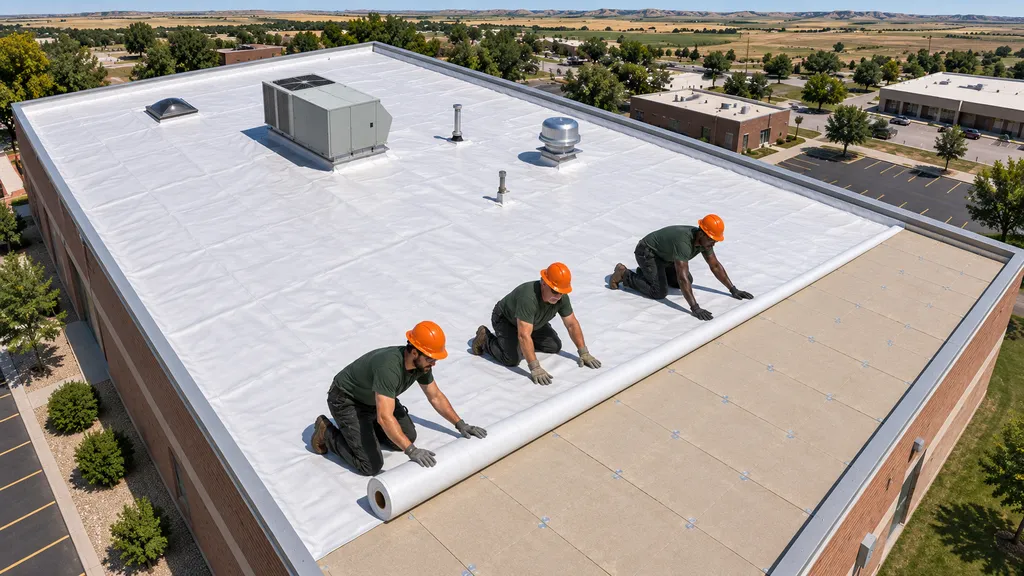
As a North Platte commercial roofing contractor, we install and replace TPO, EPDM, industrial, and metal roofs on commercial buildings across Lincoln County and nearby towns.
These are the roof conditions that usually bring an owner to North Platte commercial roofing work, from one wet ceiling tile to a roof that leaks in several places.
Ponding that sits more than two days after rain points to sagging deck, crushed insulation, or a drain set too high for the roof around it.
Split laps on single-ply membrane and lifted edges on older built-up roofs let wind-driven rain under the sheet and into the insulation below.
After a hailstorm, look for dimpled membrane, cracked flashing at curbs, and dented panels; small punctures often leak weeks later, once water finds them.
Soft spots underfoot, blisters, and stains spreading across ceiling tiles mean water has soaked the insulation board and needs a core cut to measure.
Exposed-fastener roofs work their screws loose as panels swell in July heat and shrink on winter nights, and each enlarged hole becomes a slow drip.
Curbs, pipe boots, and pitch pans around rooftop units crack first, because service techs walk there most and the flashing moves with equipment vibration.
Three paths fit most worn roofs. Core cuts and a moisture survey decide which one fits your building; the raised column is a full replacement.
Every job follows the same order, from the first roof walk to the final walkthrough, so you know what happens at each stage.
We walk the roof with you, measure each section, and photograph drains, curbs, and edges, then note what the ceiling tiles inside are showing.
Small core samples show how many layers sit on the deck and how much insulation is wet, which decides between repair, recover, and replacement.
Your proposal names the system, insulation thickness, flashing details, and edge metal, and the North Platte building permit is filed before work starts.
Crews remove the old roof one section at a time, repair the deck, set new insulation, and seal each area watertight before leaving for the day.
Last, seams get probed, flashing is checked at every curb and drain, debris is cleared, and we walk the finished roof with you.
Book an inspection and core cuts so the scope matches your roof.
Schedule Free InspectionPick a roof type to jump to how we install it, what it fits, and what we check before quoting.

TPO is a white single-ply sheet whose seams are melted together with hot air. It reflects summer sun, covers big low-slope roofs with few seams, and goes over new insulation or a recover board.
Good Fit
Check First
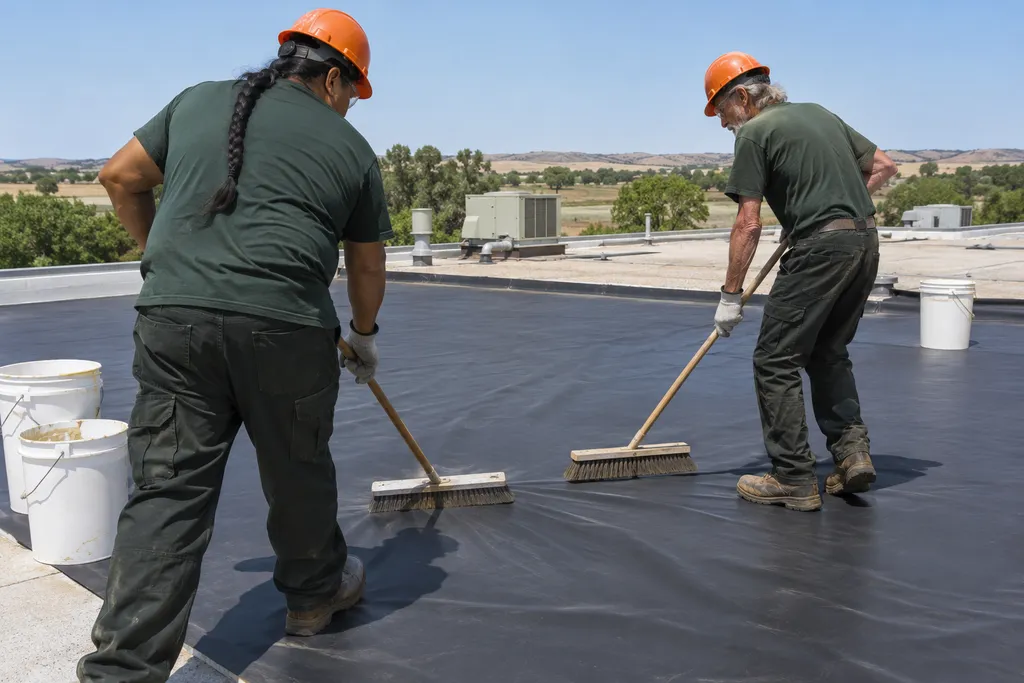
EPDM is a thick rubber sheet with taped seams that stays flexible through Nebraska cold. We install it fully adhered or ballasted, in 60 or 90 mil, over insulation sized for the building.
Good Fit
Check First
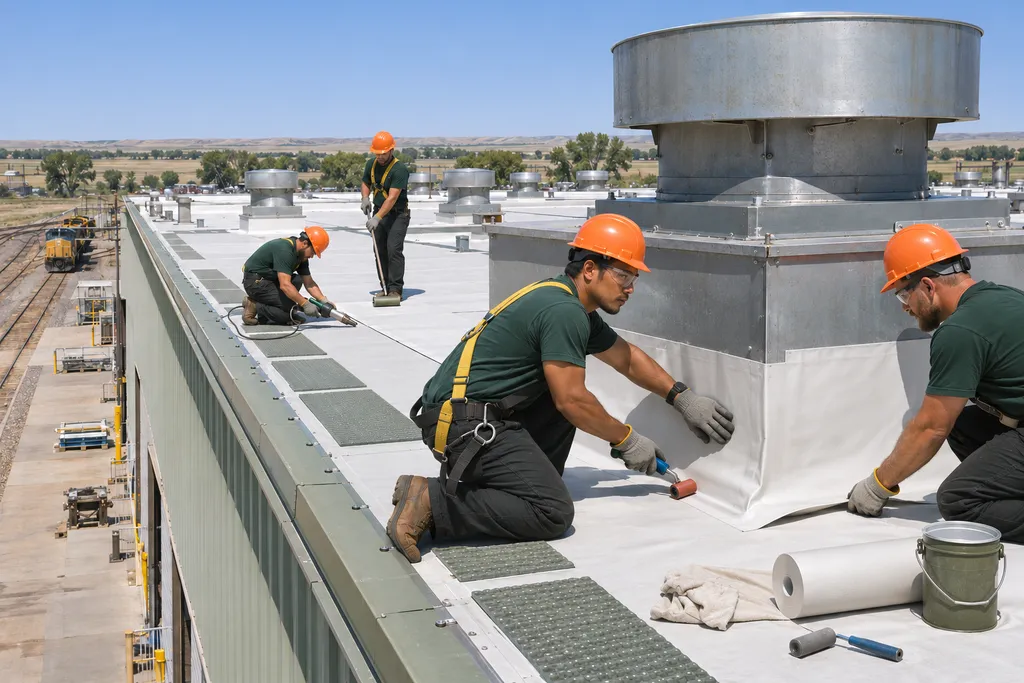
Plant and processing roofs carry exhaust fans, heavy curbs, and steady service traffic. We choose a membrane or metal system for what vents onto the roof and phase tear-off around production.
Good Fit
Check First
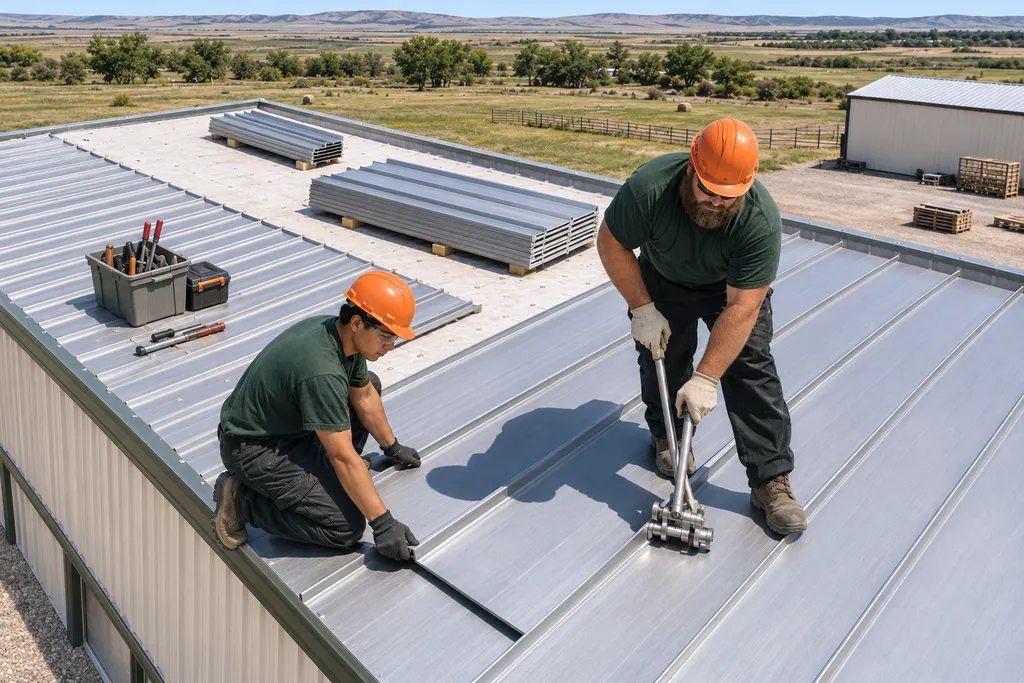
We install standing-seam and exposed-fastener metal on shops, ag buildings, and fleet garages, sized to the slope, the purlin spacing, and the snow that slides off a steep roof.
Good Fit
Check First
Repairs buy time on a dry roof. A replacement resets the whole assembly from the deck up, and these are the differences owners notice first.
| What Changes | Keep Repairing | Replace The Roof |
|---|---|---|
| Leaks | Fixed one spot at a time as they show up | Field, seams, and flashings renewed at once |
| Insulation | Wet boards stay unless cut out | New dry board, often thicker than the old |
| Drainage | Ponding areas stay where they are | Tapered insulation and crickets move water to drains |
| Summer Heat | Old surface and insulation stay | White TPO surface and added insulation |
| Budget | Smaller bills, more often | One planned project with a known scope |
| Inspections | Spring and fall checks chase old patches | Checks start from a clean, documented roof |
We take commercial roofing work in North Platte and in Ogallala, Sutherland, Grant, Curtis, and Hershey.
Outside these towns? Call us or send us a message.
4,878
Residents, 2020 Census
Keith County's seat on I-80, where store, restaurant, and travel-service roofs get replaced around open hours.
Ogallala commercial roofing1,313
Residents, 2020 Census
A Lincoln County village west on I-80 and US 30, where tear-offs run one section per workday.
Sutherland commercial roofing1,197
Residents, 2020 Census
Perkins County's seat on Mountain Time, where deliveries and staging get planned before the crew drives out.
Grant commercial roofing806
Residents, 2020 Census
In Frontier County, where we re-panel or recover metal shops and ag buildings after a purlin check.
Curtis commercial roofing649
Residents, 2020 Census
A Lincoln County village west of North Platte, with small flat-roof buildings that need drainage rebuilt.
Hershey commercial roofingFive questions owners ask first. More answers are in the commercial roofing FAQ.
It depends on the system and how well water leaves the roof. A TPO, EPDM, or metal roof over dry insulation with working drains outlasts one patched over wet board. Hail, foot traffic around units, and freeze-thaw at flashings wear every roof down, so a spring and fall walk catches small damage before it spreads.
Single-ply membranes cover most flat commercial roofs here. TPO brings welded seams and a white surface that stays cooler in July, and EPDM is rubber that stays flexible on subzero nights. We choose between them after looking at the deck, the insulation, the rooftop units, and how the building is used.
Square-foot cost rises and falls with five things: the system, insulation thickness, tear-off layers, deck repair, and the count of curbs, drains, and pipes to flash. Roof height and crane access matter too. We price after measuring the roof and pulling core samples, so the number reflects your building.
Line up the written scopes before the prices. Each proposal should name the membrane or panel, insulation type and thickness, tear-off or recover, flashing details, edge metal, and who files the city permit. Ask how wet insulation found mid-job gets priced, because bids built on the same scope are the ones you can compare fairly.
Drifts pile up against parapets, taller walls, and rooftop units, putting extra weight on small areas of the roof. Meltwater that refreezes at blocked drains adds more. Clear drains in late fall, watch the drift areas after big storms, and call when a ceiling sags or a door near the roof starts to bind.
Tell us about the building and the leaks, and we will set up a roof walk and send a written scope.