
Ponding
Rings Of Dried Dirt
Dark rings of dirt left behind when ponds dry out mark the low spots, and the membrane under them ages faster.
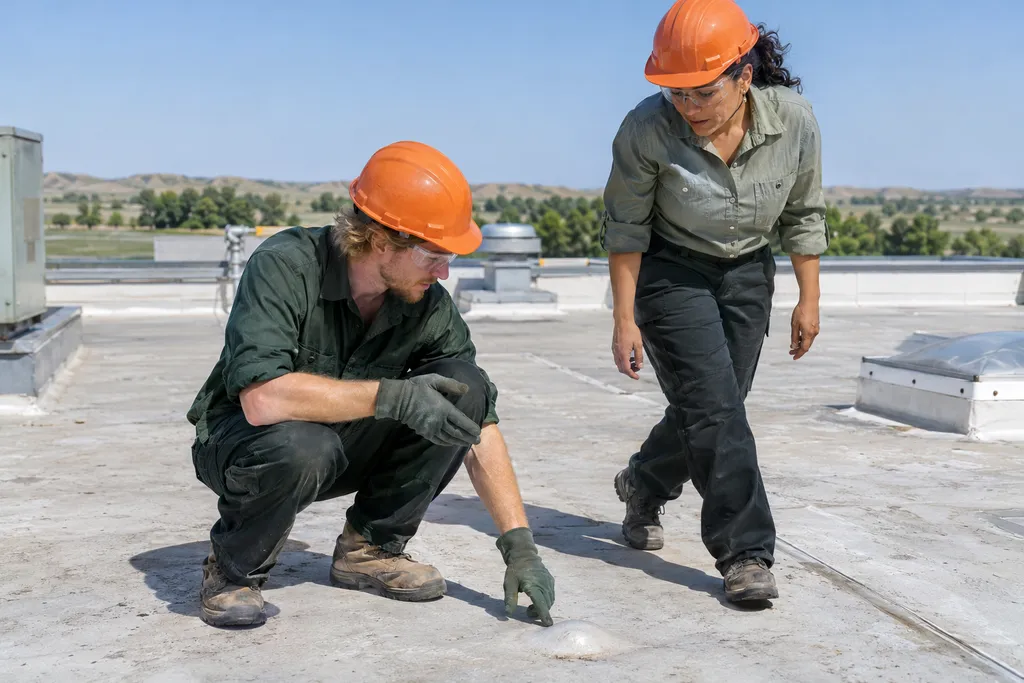
As a Hershey commercial roofing contractor, we fix drainage on small flat-roof buildings with tapered insulation, new drains, and TPO or EPDM membrane.
Hershey commercial roofing problems on small flat roofs usually trace back to water that has nowhere to go after a storm.
We find the low spots, check whether drains and scuppers sit at the lowest point, and build tapered insulation and crickets that push water toward them. A new membrane over a roof that still ponds wears out early, so drainage comes first.
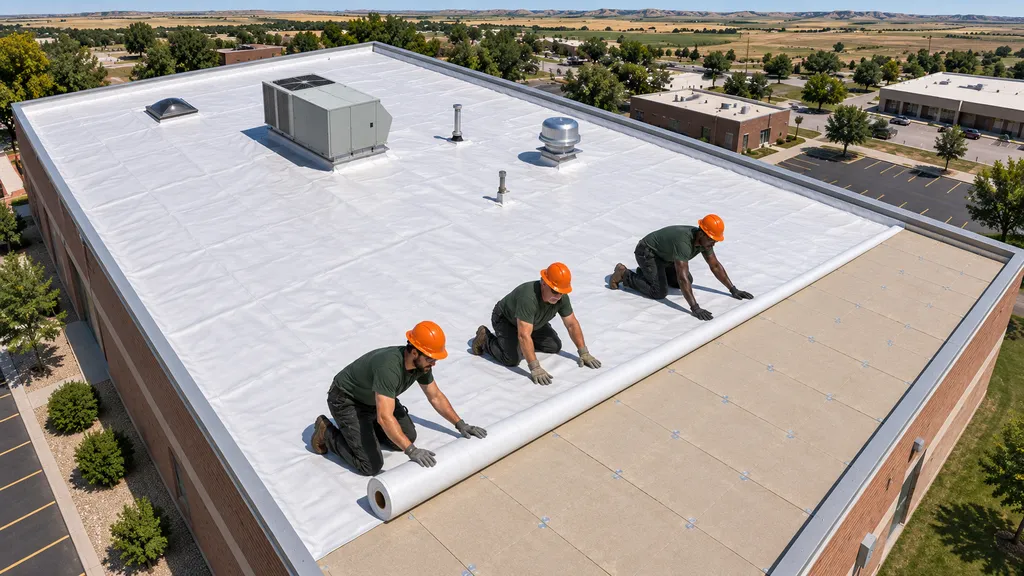
Small flat roofs give a few clear warnings when water is not leaving.
Dark rings of dirt left behind when ponds dry out mark the low spots, and the membrane under them ages faster.
Roof drains installed above the surrounding roof, or lifted by added layers, leave a moat of water around their bowls.
Narrow scuppers through parapet walls clog with leaves and ice, so water rises behind the wall until it finds a seam.
Meltwater refreezes in cold drains and gutters on late-winter nights, backing water under edge metal and flashing.
When a roof settles, the drain can end up higher than the surrounding membrane, so water pools beside it instead of leaving the roof.
Laps that sit underwater after every rain lose adhesion first, and the leak shows up wherever the water finds the weakest seam.
Insulation under a long-standing pond compresses and soaks up water, which deepens the dip and spreads the wet area each year.
Patching fixes the leak you see. Rebuilding the slope changes these things for a small flat roof.
| What Changes | Patch Over The Low Spots | New Roof With Tapered Slope |
|---|---|---|
| Ponding | Water still sits after storms | Tapered fill moves it to drains |
| Drains | Old bowls stay high | Drains reset at the low point |
| Scuppers | Same narrow openings | Openings sized and flashed |
| Membrane | Patches age under standing water | New TPO or EPDM over a dry surface |
| Winter | Ice still builds at drains | Water clears before it freezes |
Small flat roofs here take one of two membranes, and larger or pitched buildings take the other two systems.

White TPO welded over tapered insulation fixes ponding and seams in one job.
TPO Roofing details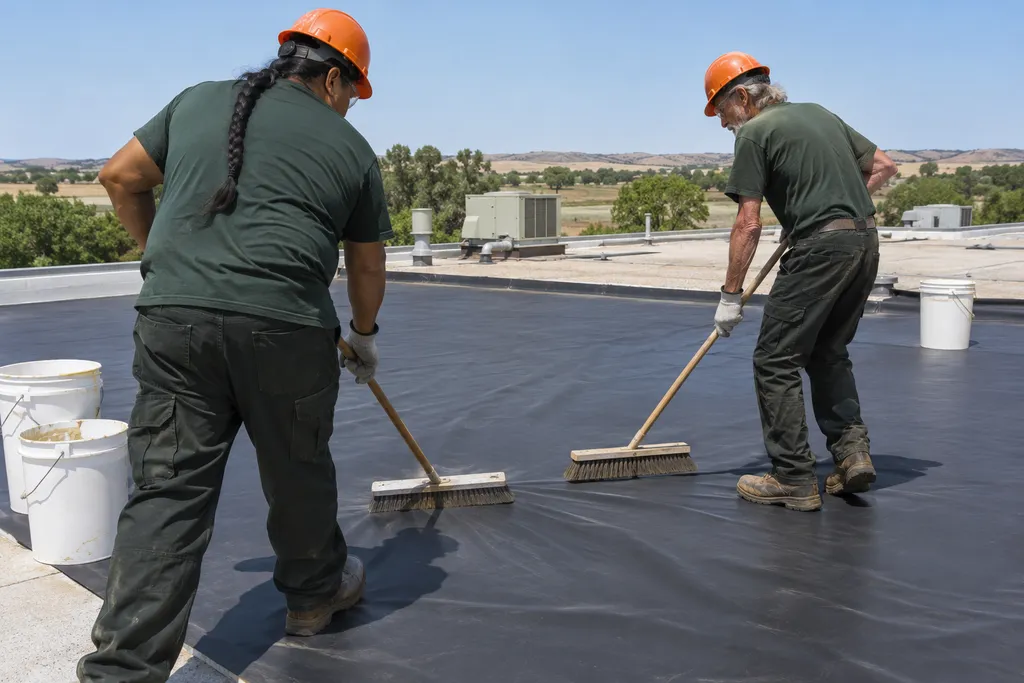
EPDM rubber over a rebuilt slope stays flexible when meltwater freezes at night.
EPDM Roofing details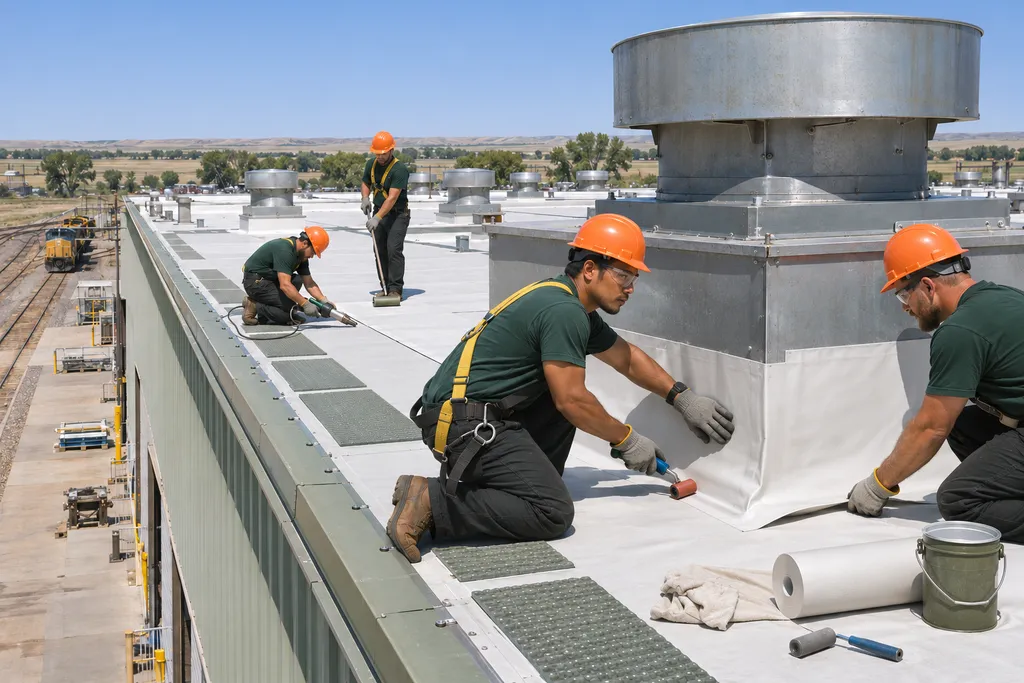
Larger buildings with equipment on the roof get a phased industrial plan.
Industrial Roofing details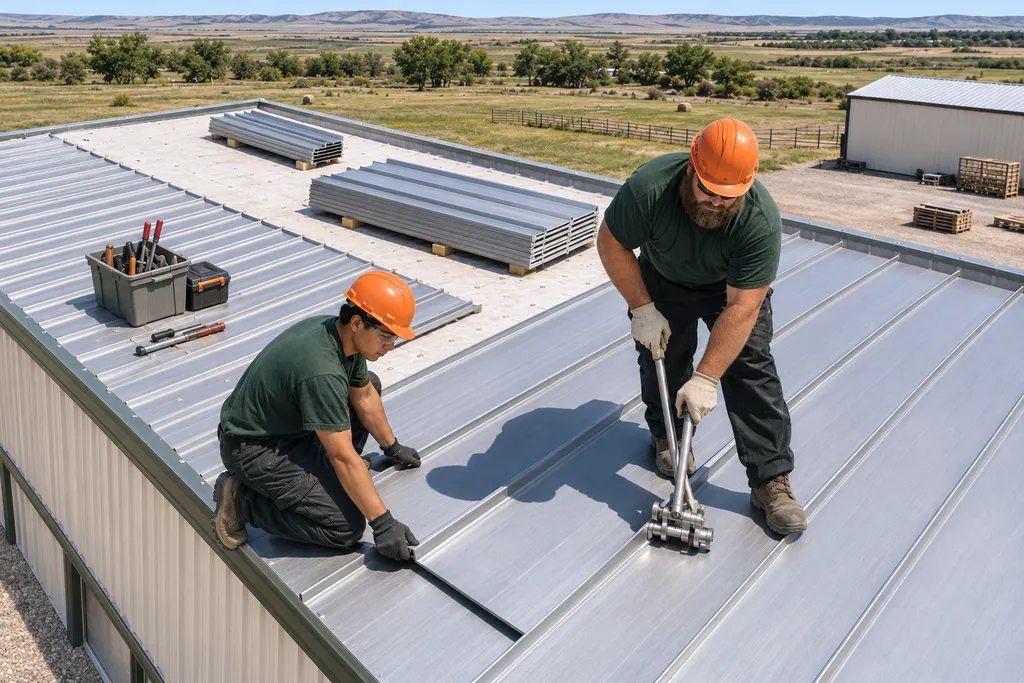
Pitched shops and storage buildings shed water fast under new metal panels.
Commercial Metal Roofing detailsCall and tell us where it ponds or drips, and we will check the drains.
Call UsA drainage rebuild follows four steps that start with finding where the water sits.
We walk the roof after rain or mark the dried rings, and measure how far each low spot sits below its drain.
Core samples show which boards are wet, and those layers come off so the new slope starts from a dry deck.
Tapered insulation and crickets are laid out so every section falls toward a drain or scupper at a steady pitch.
Drains are reset at the low points, scuppers resized, and the new membrane is installed and flashed into each one.
After install, a hose test confirms water reaches each drain, and we walk the finished roof with you.
We also take commercial roofing work in North Platte, Ogallala, Sutherland, Grant, and Curtis.
Outside these towns? Call us or send us a message.
4,878
Residents, 2020 Census
Keith County seat with stores and travel businesses on I-80.
Ogallala commercial roofing1,313
Residents, 2020 Census
Village west on I-80, roofs replaced section by section.
Sutherland commercial roofing1,197
Residents, 2020 Census
Perkins County seat, deliveries planned before the drive out.
Grant commercial roofing806
Residents, 2020 Census
Metal shops and ag buildings re-paneled or recovered.
Curtis commercial roofingAnswers for owners of small flat-roof buildings in Hershey.
A single-ply membrane, TPO or EPDM, fits most flat commercial roofs in Hershey. Which one comes down to the deck, insulation, and rooftop equipment, and tapered insulation can fix the low spots where water sits. Drainage gets checked first, because ponding shortens the life of any membrane.
Roof size and the system set the base price, and drainage work adds to it: tapered insulation, crickets, new or reset drains, and resized scuppers. Tear-off of wet layers and deck repair add more. Travel is a small part of a Hershey estimate.
Call or send a message with the Hershey address. Hershey sits about 15 miles west of North Platte, and we schedule roof walks there along with the rest of western Lincoln County.
When water ponds for days after every storm, yes. Standing water ages membrane, adds weight, and finds every weak seam, and patches can't change the slope. If the roof is otherwise dry and young, adding drains or crickets in one area can be enough, and core samples tell us which case you have.
Usually because the drain sits higher than the roof around it, either from the original install or from layers added in later recovers. Sagging deck between joists makes it worse. We measure the drop to each drain and reset bowls or build tapered sumps so water reaches them.
Sometimes. A recover with tapered insulation can rebuild the slope over a dry roof with one existing layer. If cores find wet board or two layers already, the old roof comes off first so the new slope starts from the deck and the drains sit at the low points.
Send the Hershey address and where the water sits, and we will map the low spots on a roof walk.