
Seams
Seams Opening At Laps
Older single-ply roofs and built-up laps open along their edges first, and wind pushes rain sideways into the insulation beneath them.
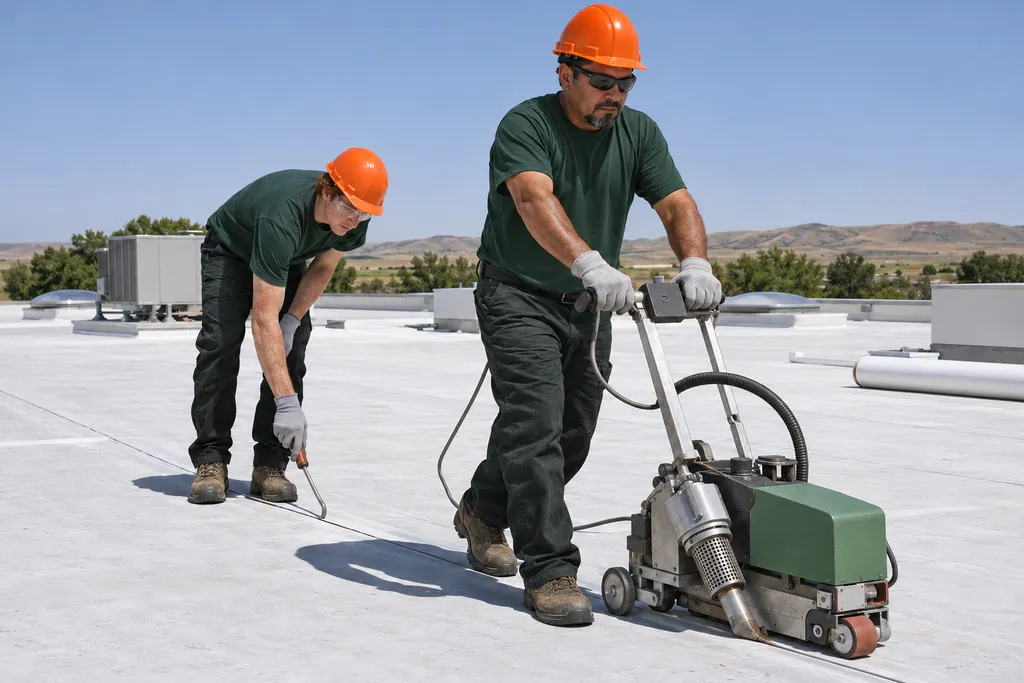
As a North Platte TPO roofing contractor, we tear off worn roofs and install white TPO membrane with welded seams over new insulation.
North Platte TPO roofing fits most low-slope commercial roofs, though EPDM and modified bitumen win on a few buildings. Here is how the three compare.
These conditions on an old roof usually point toward a new TPO system rather than another patch.
Older single-ply roofs and built-up laps open along their edges first, and wind pushes rain sideways into the insulation beneath them.
Spongy spots and blisters mean the insulation has taken on water; welding new TPO over wet board traps that moisture under the new sheet.
Water that sits for days between drains breaks down any membrane faster, so a TPO job adds tapered insulation to steer it out.
Service techs crossing to rooftop units wear the membrane at curbs and pipe boots, which is where a new roof gets walkway pads.
Three choices set the price and the service life of a TPO roof: thickness, attachment, and what goes underneath.
Sheets come in 45, 60, and 80 mil. Thicker membrane carries more weathering material over the white top layer and stands up better to hail and foot traffic.
Mechanically fastened TPO is screwed through plates into the deck at the laps. Fully adhered TPO is glued down, costs more, and resists flutter in high wind.
A dry roof with one layer can take a recover board and new TPO over it, while wet insulation or two existing layers means tearing off to the deck first.
A patch keeps the old roof going. A new TPO system changes these parts of the roof at once.
| What Changes | Repair The Existing Roof | New TPO Roof |
|---|---|---|
| Seams | Old laps resealed where they leak | Every seam welded and probed |
| Insulation | Wet board left unless cut out | New dry board, sized to the deck |
| Surface Heat | Dark or worn surface stays | White surface reflects summer sun |
| Drainage | Low spots stay in place | Tapered fill steers water to drains |
| Rooftop Units | Old curb flashing patched | New flashing and walkway pads at each unit |
TPO installs follow a set order, and each step has a check before the next one starts.
We measure each section, pull core samples to find wet insulation, and check drain heights so the new TPO roof drains the way it should.
Old roof layers come off one section at a time, and any rusted or soft deck is replaced before insulation goes down.
Flat and tapered boards go down in staggered layers, fastened or glued to the deck, with a cover board where hail or foot traffic is heavy.
Robotic hot-air welders join each lap, every seam is probed by hand, and test cuts confirm the weld before the crew moves on.
Curbs, pipes, drains, and edge metal are flashed with matching TPO, then we walk the finished roof with you and review each detail.
Some buildings in town are better served by a different system; these three cover the rest.
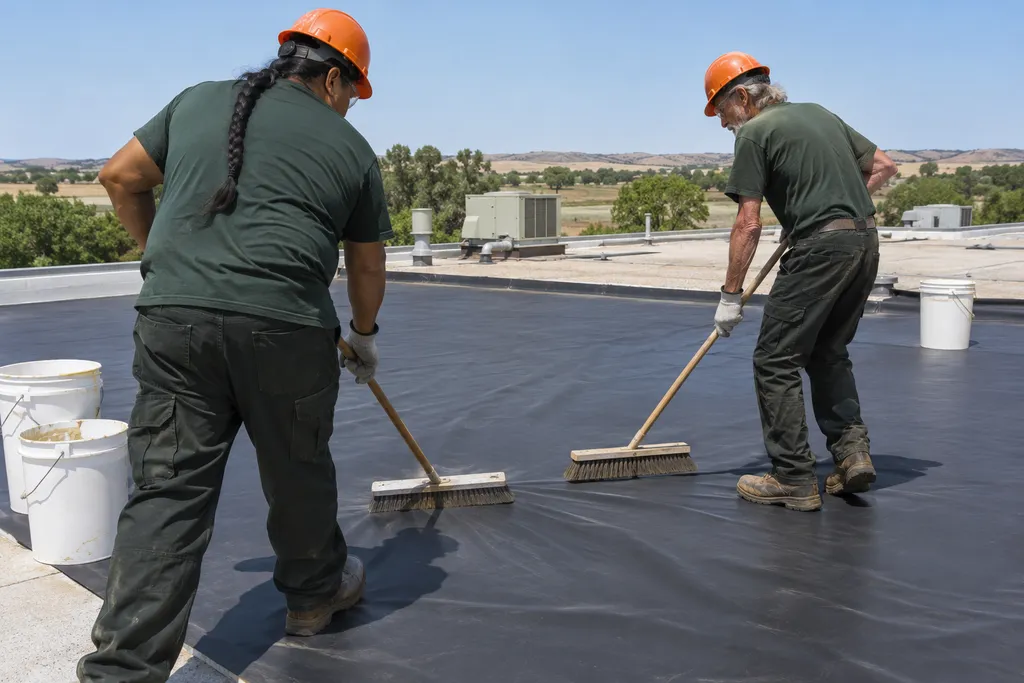
Rubber EPDM suits cold-storage rooms and roofs that see the hardest freeze swings, with taped seams in place of welds.
North Platte EPDM roofing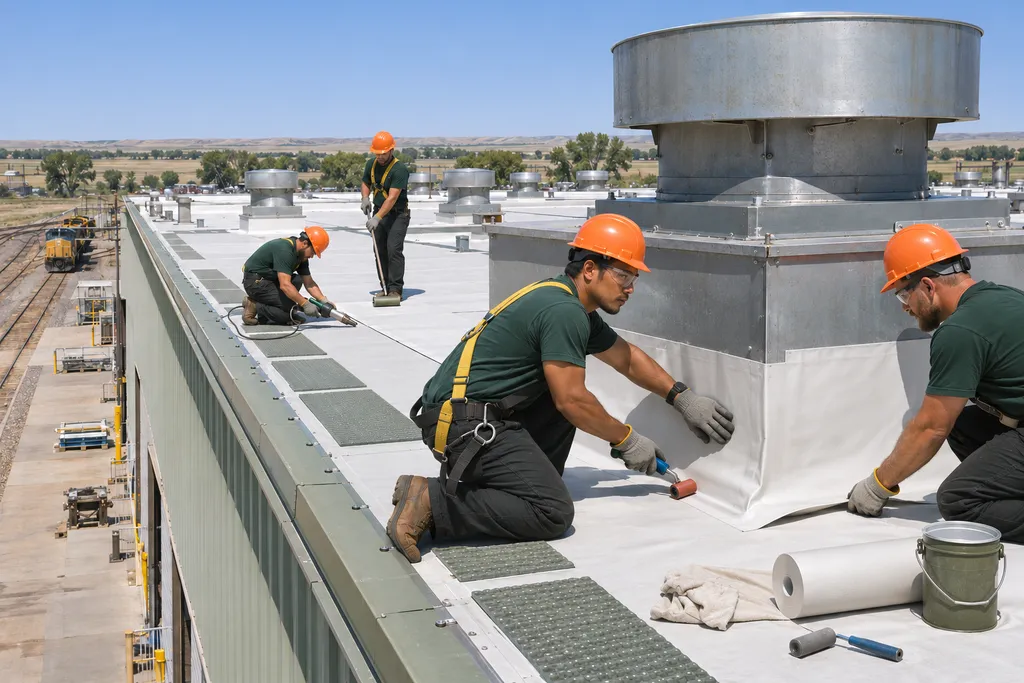
Plants with grease or chemical exhaust need a membrane rated for that exposure, phased around production lines.
North Platte industrial roofing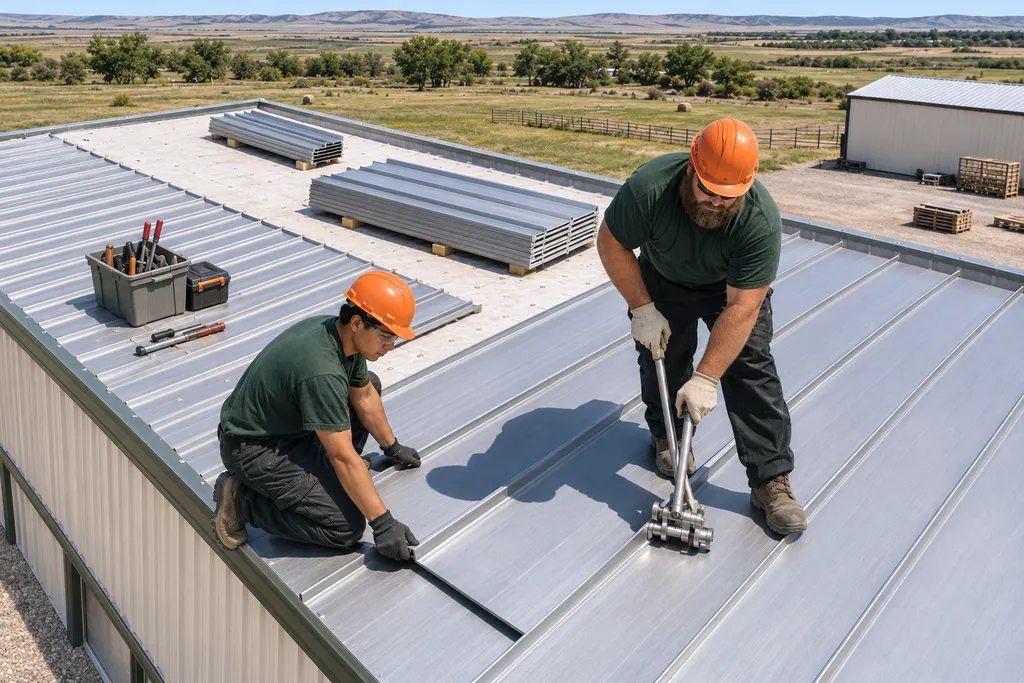
Steeper shops and ag buildings take standing-seam or exposed-fastener metal panels in place of a membrane.
North Platte commercial metal roofingShort answers to what owners ask before a TPO roof goes on.
Both are single-ply sheets, and both work here. TPO joins at welded seams and stays white, which helps on warehouses that bake in July, while EPDM is rubber with taped seams that handles subzero nights well. Seam strength, foot traffic to units, hail exposure, and the deck underneath decide which one we recommend.
A hot-air welder melts the overlapping edges of two sheets into one. On cold or windy days the welder heat and speed get adjusted, then every seam is probed with a hand tool and test cuts are pulled to confirm the weld held. Welded laps are why TPO resists leaks at its seams.
Membrane thickness, insulation, and attachment set most of the price. Fully adhered sheets use glue and labor that fastened sheets skip. Tear-off layers, deck repair, and every curb, drain, and pipe to flash add to it, and cold-weather adhesives or a short work window can shift the schedule and the cost.
Long service comes from thickness, drainage, and upkeep, and nobody can promise a number of years. An 80 mil sheet over a cover board, with water moving to drains and walkway pads at units, gives a TPO roof its strongest start. Hail and ponding shorten that life on any roof.
Punctures are the main weak point: hail and dropped tools can cut thin sheets, and seam quality rides on the welder setup that day. Formulas also differ between manufacturers. We specify thicker membrane where traffic is heavy, add pads at units, and probe every seam before calling a section done.
Yes. Big low-slope warehouse roofs are where TPO does well, because wide rolls mean fewer seams and the white surface keeps loading areas cooler. Long parapets and dock canopies need careful edge flashing, and heavy rooftop fans call for reinforced membrane at the curbs.
Send the address and what you see on the roof, and we will schedule a roof walk and core samples.