
Insulation
Layers Of Wet Board
Core samples on older roofs often find two or three layers, with water sitting in the bottom one where nobody can see it.
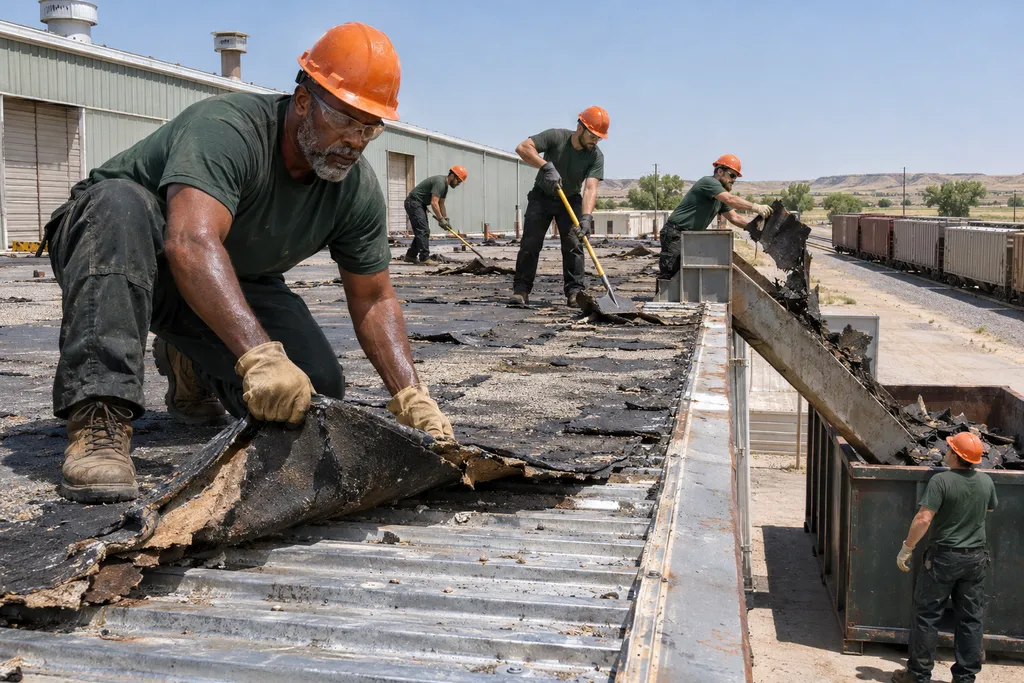
As a Sutherland commercial roofing contractor, we tear off worn roofs section by section and close each area in before the crew leaves for the day.
Sutherland commercial roofing work starts with a plan for how much roof comes off each day, so the building stays dry and in use.
We size each section to what the crew can tear off, insulate, and seal before evening, then move to the next. If weather turns, the open area is covered and tied down, and work resumes on the next dry day.
Roofs that reach replacement usually show more than one of these.
Core samples on older roofs often find two or three layers, with water sitting in the bottom one where nobody can see it.
Steel deck rusted by years of slow leaks flexes under a boot heel and has to be cut out and replaced during tear-off.
Old gravel and tar roofs crack and blister as they dry out, and patches laid on top of patches stop holding.
Wood nailers under edge metal rot where water has run for years, loosening the trim that holds the roof edge down.
Older roofs often drain through a single small outlet, and when it backs up the water climbs past flashing and into the walls below.
Water that sat in the same low spots for years crushed the insulation beneath them, and the dip carries into any recover laid on top.
Each past recover raised the roof around rooftop units, so old curbs now sit too low for new flashing to reach a proper height.
A recover saves tear-off cost on a dry roof with one layer. Tear-off changes these things when the roof underneath is wet.
| What Changes | Recover Over The Old Roof | Tear Off To The Deck |
|---|---|---|
| Wet Layers | Stay trapped under the new roof | Removed and hauled away |
| Deck | Checked only from above | Exposed, repaired, and refastened |
| Roof Weight | Adds a layer to the structure | Back to a single new assembly |
| Drainage | Old low spots carry over | Tapered insulation built in |
| Edges | Old nailers stay | New nailers and edge metal |
After tear-off, the new roof is one of these four systems.

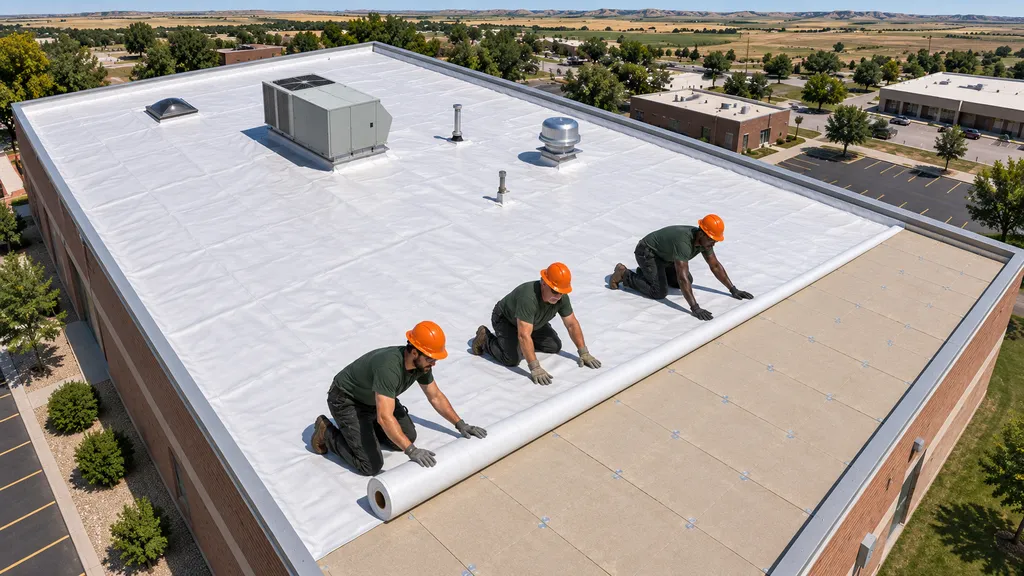
Welded white TPO goes over new insulation on flat office and storage roofs.
TPO Roofing details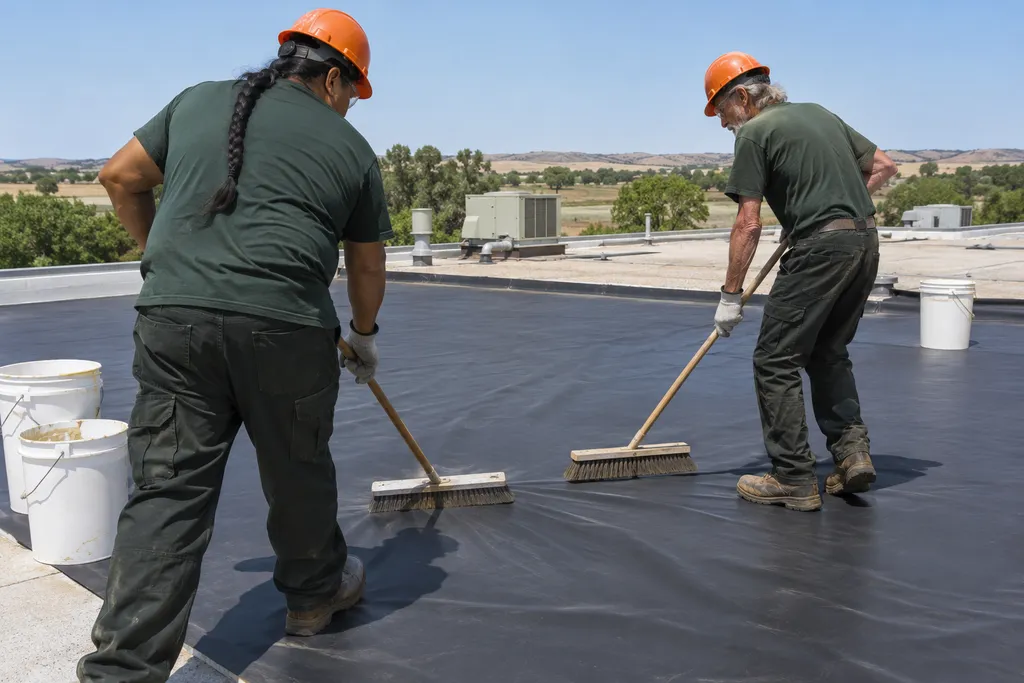
Fully adhered EPDM rubber suits flat roofs that see the hardest winter nights.
EPDM Roofing details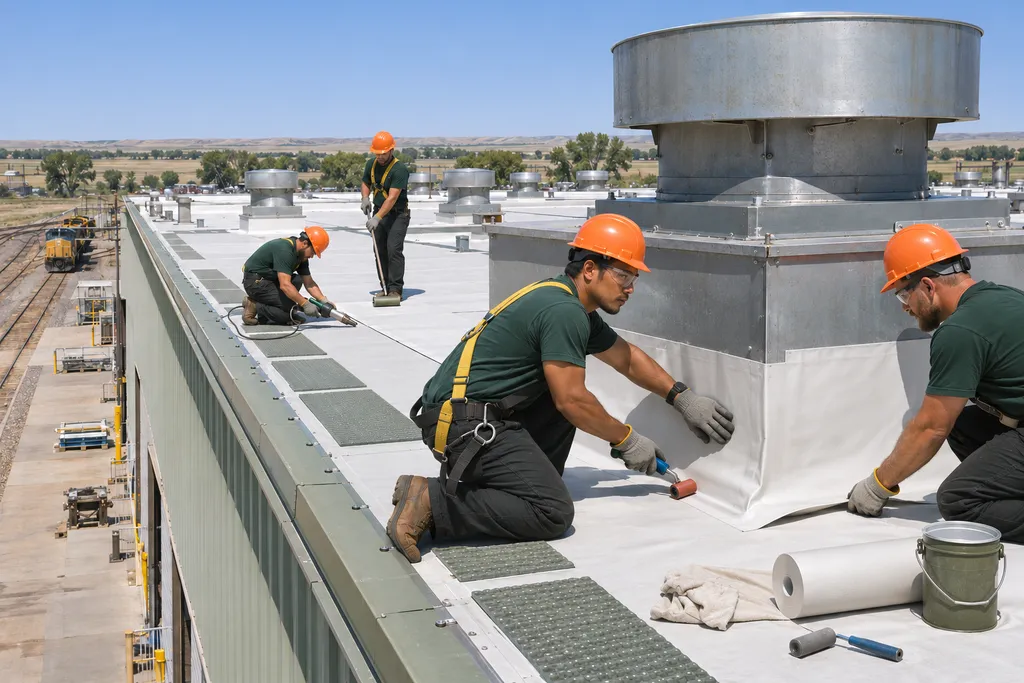
Larger buildings with exhaust or heavy equipment get a phased industrial plan.
Industrial Roofing details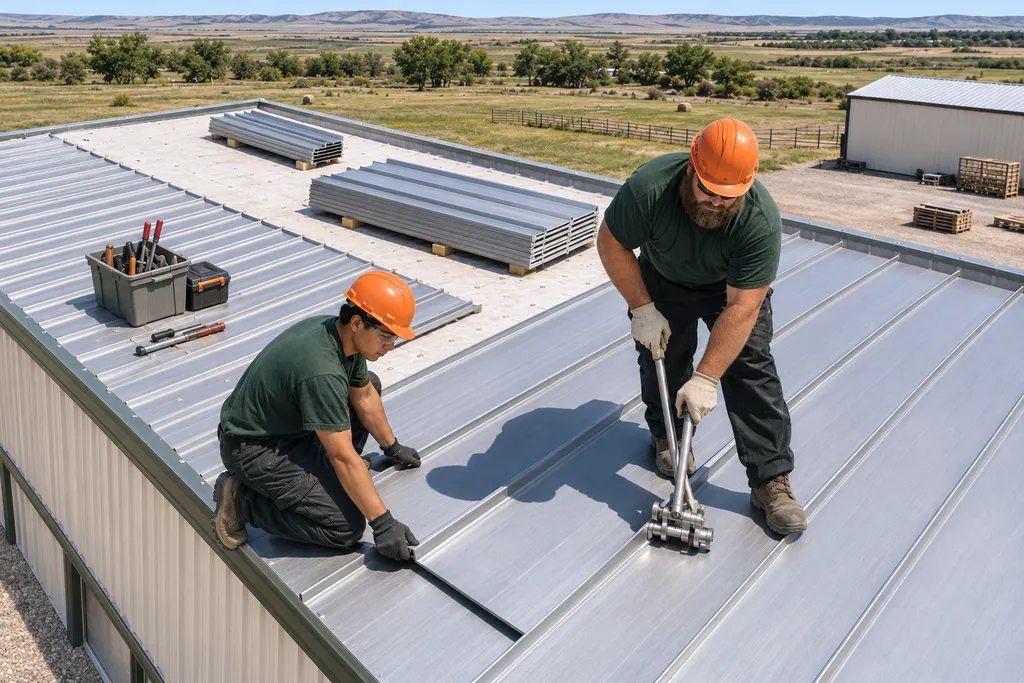
Pitched shops and storage buildings take new standing-seam or exposed-fastener panels.
Commercial Metal Roofing detailsA section-by-section tear-off repeats the same four steps until the roof is done.
Core samples show the layers and the wet areas, and the roof is divided into sections the crew can finish in a day.
Old layers come up and go down a chute to a dumpster, then rusted or soft deck is cut out and replaced.
Insulation, cover board, and the new membrane or panels go on, flashed at curbs, drains, and walls in that section.
Before the crew leaves, a temporary seal ties the new roof to the old one so overnight rain stays outside.
At the end, seams, curb flashing, drains, and edge metal get checked with you, and the dumpster leaves with the last of the debris.
We also take commercial roofing work in North Platte, Ogallala, Grant, Curtis, and Hershey.
Outside these towns? Call us or send us a message.
4,878
Residents, 2020 Census
Keith County seat with stores and travel businesses on I-80.
Ogallala commercial roofing1,197
Residents, 2020 Census
Perkins County seat, deliveries planned before the drive out.
Grant commercial roofing806
Residents, 2020 Census
Metal shops and ag buildings re-paneled or recovered.
Curtis commercial roofing649
Residents, 2020 Census
Small flat roofs with drainage and low-spot fixes.
Hershey commercial roofingWhat owners in Sutherland ask before a replacement.
It starts with an inspection and core cuts to find wet insulation. Then the old roof comes off in sections, the deck gets repaired, and new insulation and a membrane or metal system go on.
Each section is closed in before the crew leaves, and the job ends with edge metal, curb flashing, and a walkthrough with you.
Square footage is the starting point, but the price also reflects tear-off layers, wet insulation, deck repair, and how many curbs, drains, and walls need flashing. We measure and core the roof first so the number matches your building.
Call or send a message with the Sutherland address, and we will schedule a roof walk. Sutherland sits about 20 miles west of North Platte on I-80, and we take commercial roofing work across that stretch of Lincoln County.
Ask each one for a written scope that names the system, insulation, tear-off depth, flashing details, and who files any permit. Compare scopes before prices, and ask how wet insulation found during tear-off is handled. A contractor who cores the roof first can price it accurately.
The open section gets covered and sealed to the existing roof, and work pauses until the deck is dry. Because each section is sized to one day, only a small area is open at once. We watch the forecast and hold tear-off when a storm is due.
Yes. Tear-off runs one section at a time, debris goes down an enclosed chute to the dumpster, and each section is sealed before the crew leaves. We plan noisy work and dumpster swaps around deliveries and the hours people are inside the building.
Send the Sutherland address and what the roof is doing, and we will plan the sections with you.