
Panels
Rust Through Panel Laps
End laps hold moisture between two sheets, so rust eats through there first and drips start along a straight line across the roof.
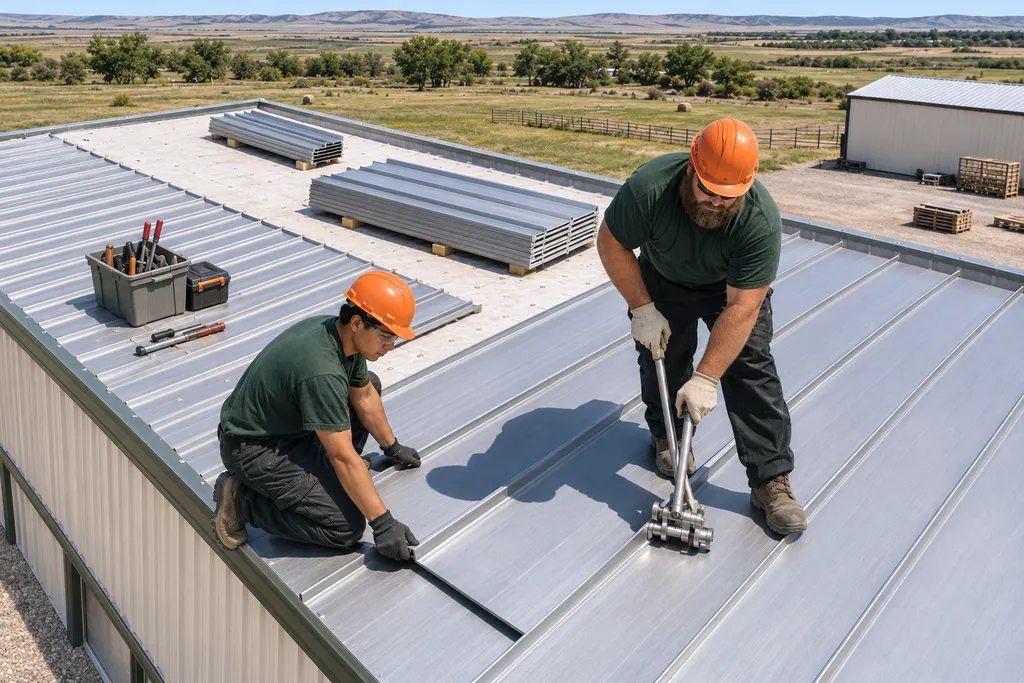
As a Curtis commercial roofing contractor, we re-panel and recover metal shops and ag buildings, and install TPO or EPDM on flat commercial roofs.
Curtis commercial roofing work on a steel building comes down to one choice: take the old panels off, or frame over them and add new ones.
We check purlin spacing, rust on the framing, and the fastener pattern before choosing. Old panels come off when they are rusted through or the purlins need work, and a framed recover keeps them in place when they are dry and the frame is solid.
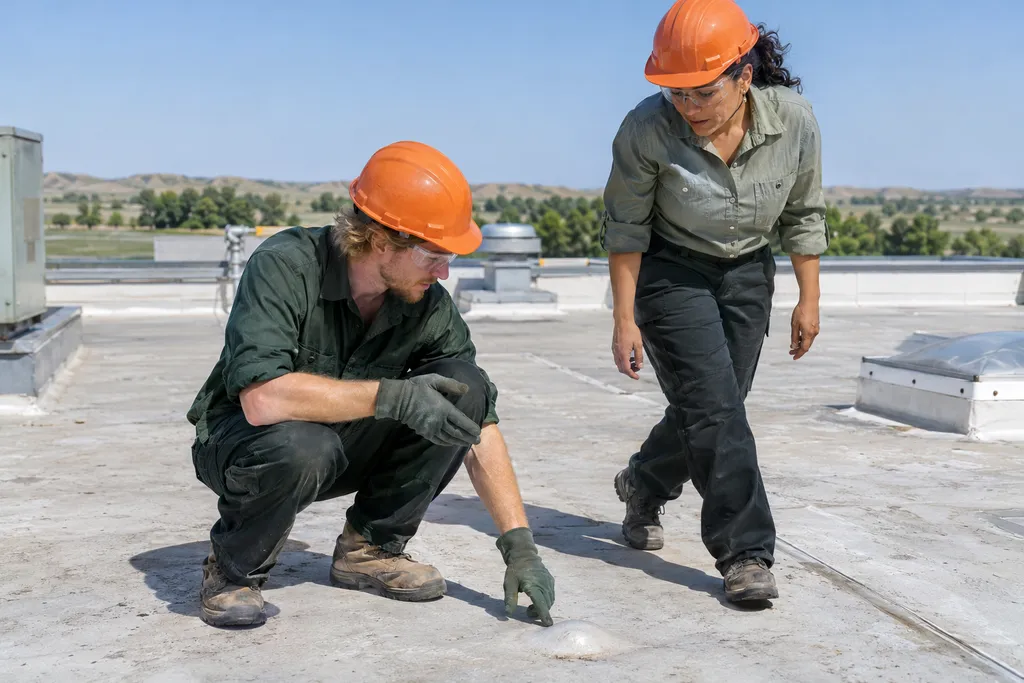
Steel buildings show wear in the same places year after year.
End laps hold moisture between two sheets, so rust eats through there first and drips start along a straight line across the roof.
Faced insulation under old panels soaks up condensation from livestock, stored grain, or a heated shop and sags between purlins.
Translucent panels yellow and crack after years of sun, leaking at their laps and turning dangerous to step near.
Past repairs with screws that missed the purlins leave holes that only rubber washers cover, and those washers split in the cold.
Exposed-fastener panels move with every hot day and cold night, and screws work loose until their washers stop sealing the hole.
Steel gutters along long eaves rust through where meltwater sits all winter, and the overflow runs down the wall into the building.
Wind works ridge caps and rake trim loose first, and once the closures go, rain and snow blow in at the top of the roof.
Fastener work buys time on panels with solid steel. New panels change these things.
| What Changes | Re-Screw And Re-Seal | New Panels Or Recover |
|---|---|---|
| Rust | Spot treated where visible | New coated steel across the roof |
| Condensation | Old wet insulation stays | New insulation with a vapor retarder |
| Skylights | Old panels patched | Replaced or covered with steel |
| Fasteners | Larger screws in old holes | Fresh pattern into solid purlins |
| Snow | Slides off over doors | Guards placed over doors and walks |
Metal buildings take panels, while flat additions and offices take a membrane.
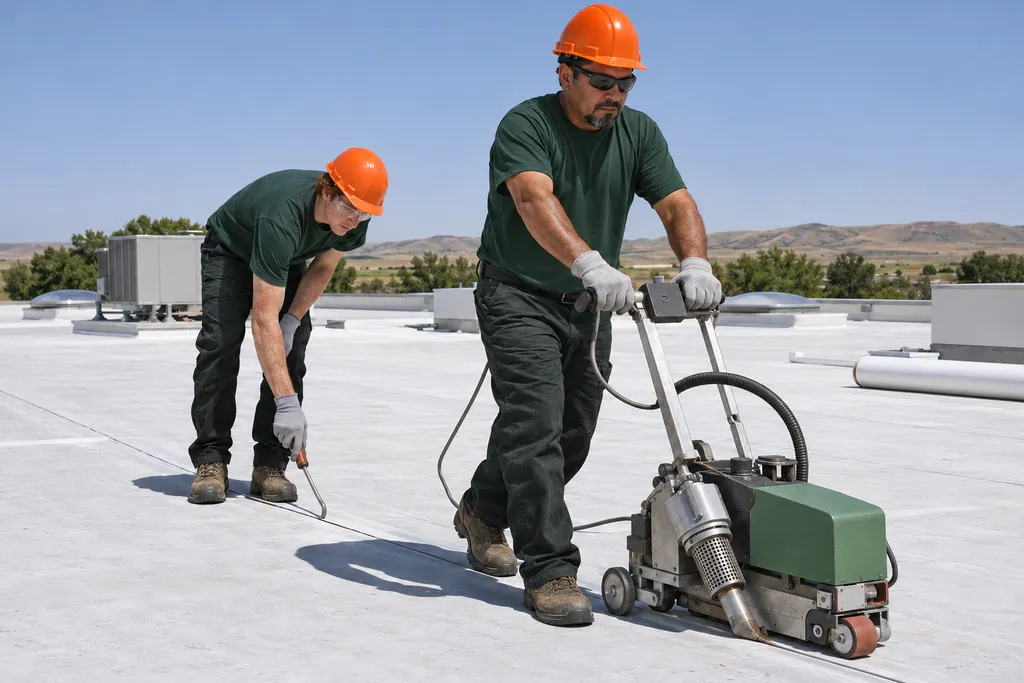
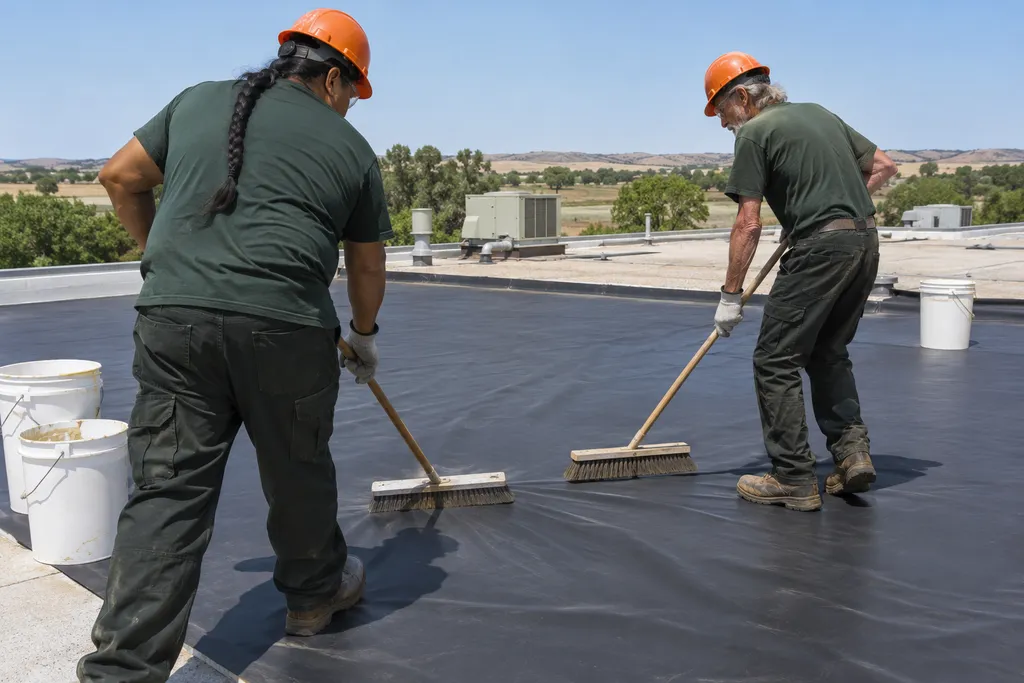
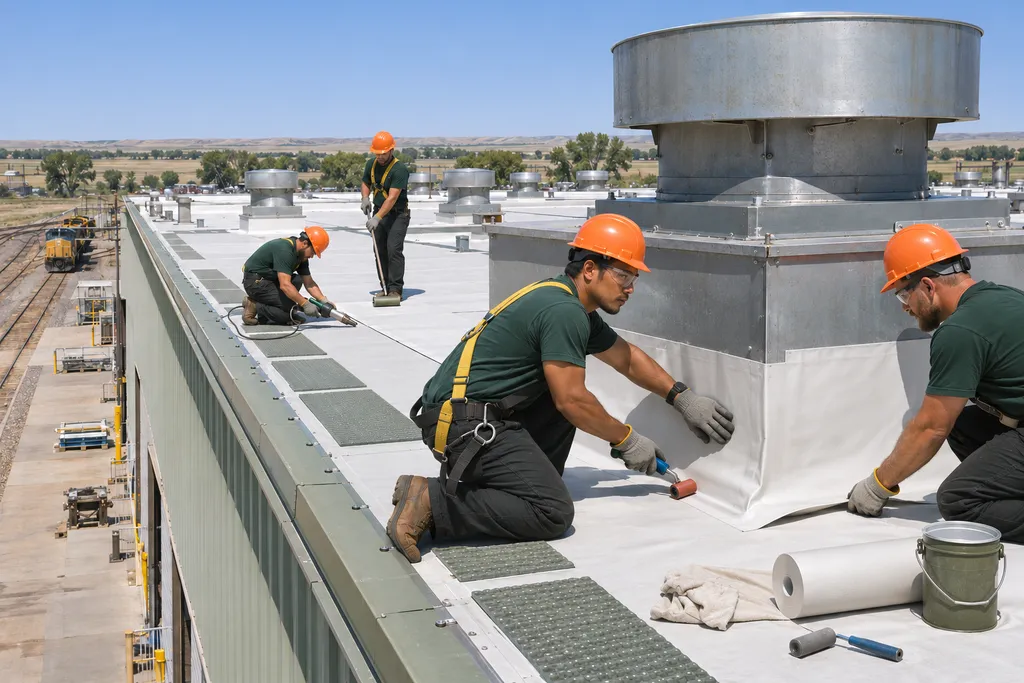
Processing and storage buildings with fans get exposure-rated roofing in phases.
Industrial Roofing details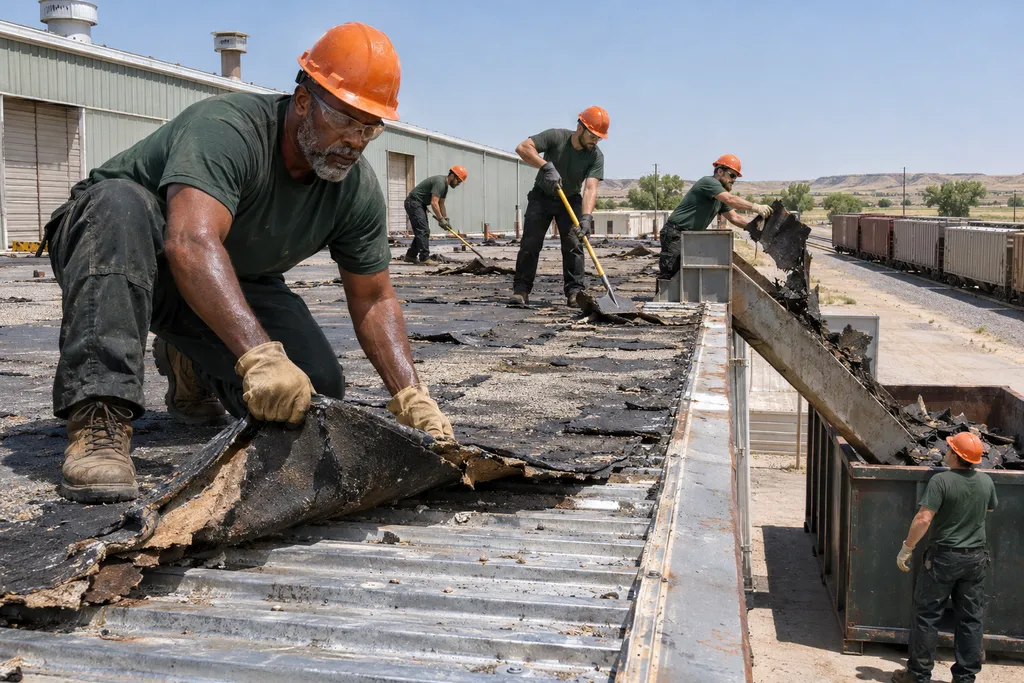
Old panels come off, the purlins get repaired, and new steel goes on.
Commercial Metal Roofing detailsCall and tell us where the water lands, since a leak and condensation look alike.
Call UsBook a roof walk to check purlins and fastener rows first.
Schedule Free InspectionMetal re-roofs follow these four steps, whether the old panels stay or go.
We measure purlin spacing, look for rust on the framing, and map the old fastener rows before choosing removal or a recover.
Rusted panels come off, and dry ones stay under new framing that sets the height and spacing for the new roof.
Fresh insulation and a vapor retarder go in so warm, moist air stops condensing on the steel above.
New panels go up square to the eave, with closures, ridge and rake trim, and snow guards over doors and walkways.
A final walk inside and out checks the panel seams, trim, and gutters, and confirms the old leak lines on the roof are dry.
We also take commercial roofing work in North Platte, Ogallala, Sutherland, Grant, and Hershey.
Outside these towns? Call us or send us a message.
4,878
Residents, 2020 Census
Keith County seat with stores and travel businesses on I-80.
Ogallala commercial roofing1,313
Residents, 2020 Census
Village west on I-80, roofs replaced section by section.
Sutherland commercial roofing1,197
Residents, 2020 Census
Perkins County seat, deliveries planned before the drive out.
Grant commercial roofing649
Residents, 2020 Census
Small flat roofs with drainage and low-spot fixes.
Hershey commercial roofingAnswers for shop, farm, and business owners in Curtis.
Yes, when the frame and purlins hold up. Old panels either come off or get covered by new framing, and insulation and vapor control are replaced at the same time. We measure purlin spacing and map fastener patterns on the Curtis building so every new screw lands in solid framing.
Ask whether the old panels will come off or stay under new framing, and why. Ask how purlin spacing was checked, what insulation and vapor retarder are included, and where snow guards go. A written scope that answers those questions is easier to compare than a price per square.
Panel type and gauge, removal or recover, framing repairs, insulation, trim, and snow guards set the price. Skylight replacement and travel to Curtis add to it. Measuring the building and checking the purlins first lets the price reflect the steel you actually have.
No. Flat offices, storefronts, and low additions take TPO or EPDM membrane, and processing buildings get an industrial plan. Metal is the answer for pitched steel buildings, and many properties need both, such as a metal shop with a flat office attached.
Drips on clear, cold mornings usually come from condensation, while drips during or after rain point to a leak. Condensation spreads across the underside of the panels, and a leak follows one line from a lap or fastener. We check both during the roof walk, since the fixes are different.
Both options work. Old translucent panels can be swapped for new ones with the same rib profile, or covered with steel where daylight is no longer needed. Either way, the laps get fresh sealant and the panel ends get closures so wind-driven snow stays out.
Send the Curtis address and the building size, and we will check the purlins and panels on a roof walk.