
North Platte Commercial Roofing FAQ
Answers On Systems, Costs, Codes, And Nearby Towns
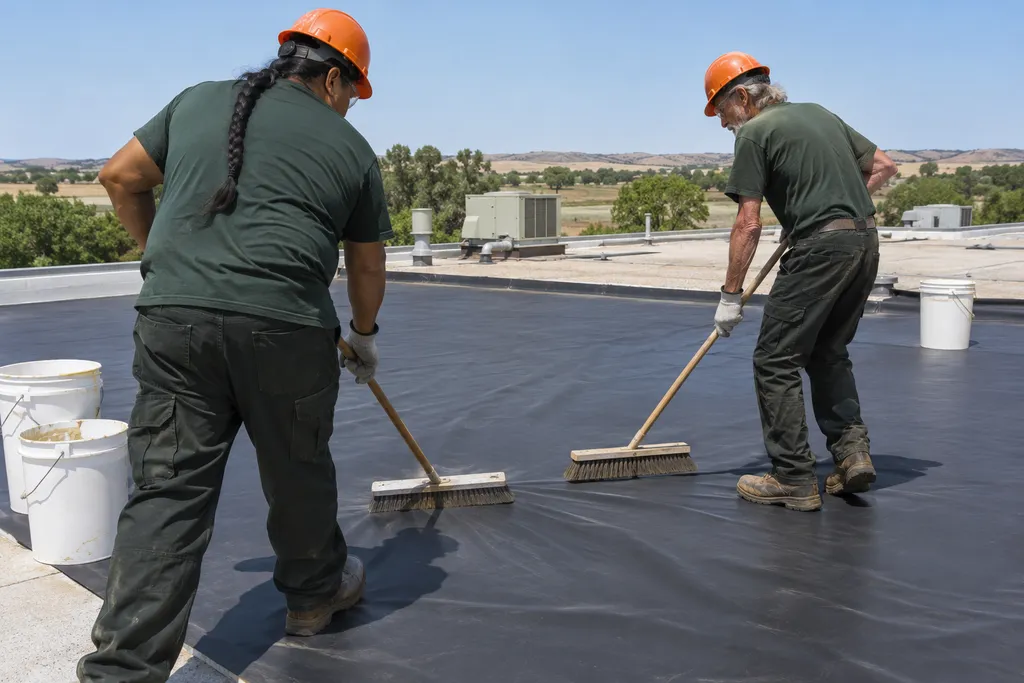
This North Platte commercial roofing FAQ answers what building owners ask about TPO, EPDM, industrial, and metal roofs, costs, and permits.
North Platte Commercial Roofing FAQ By Topic
Each answer in the North Platte commercial roofing FAQ starts with the short answer, then the detail. Jump to a topic below.
Each answer below gives the short answer first, then the detail, for building owners and facility managers weighing a commercial roof in North Platte or a nearby town.
Commercial Roofing in North Platte
How long does a commercial roof last in North Platte?
Commercial roof life in North Platte depends on the system, the installation, drainage, and upkeep. TPO, EPDM, and metal roofs each carry different service ratings from their manufacturers.
Hail, UV, freeze-thaw cycles, and ponding water shorten any system. Inspections each spring and fall, plus prompt repair of punctures and open seams, help a roof reach its expected life.
What flat roofing systems work on North Platte commercial buildings?
Flat roofs on North Platte commercial buildings are usually covered with single-ply membranes such as TPO or EPDM. TPO offers heat-welded seams and a white surface.
EPDM is a flexible rubber membrane that handles deep cold well. The right choice depends on the deck, the insulation, rooftop equipment, and how the building is used day to day.
What drives commercial roofing cost per square foot in North Platte?
Commercial roofing cost per square foot in North Platte is driven by the system chosen and the insulation thickness. Tearing off the old roof adds more.
Deck repairs, wet insulation removal, and the number of penetrations and curbs add labor. Roof height, crane or lift access, and edge metal details also change the price. A measured inspection sets the scope that pricing is based on.
How should North Platte building owners compare commercial roofing companies?
North Platte building owners should compare commercial roofing companies on the scope each one writes as well as the price.
A clear proposal names the system, insulation, tear-off or recover, flashing details, and who pulls the city permit. Ask how each company handles wet insulation found during tear-off and how changes are priced. Matching scopes makes bids comparable.
How do snow drifts affect commercial roofs in North Platte?
Snow drifts put extra weight on North Platte commercial roofs near parapets, walls, and rooftop units. Commercial roofs are designed for snow loads set by the building code, but drifts concentrate weight in small areas. Meltwater that refreezes at drains adds more load. Clearing drains before winter and checking drift areas after storms reduces risk.
TPO Roofing
How do TPO and EPDM compare for a North Platte commercial roof?
Both TPO and EPDM are single-ply membranes, and either can serve a North Platte commercial roof well. TPO has heat-welded seams and a white, reflective surface. EPDM is a rubber sheet with taped seams that stays flexible in deep cold. We weigh seam strength, rooftop traffic, hail exposure, and the existing deck before recommending one.
How are TPO seams welded on a North Platte roof?
On a North Platte roof, TPO seams are joined with a hot-air welder that melts the overlapping sheets into one piece. Welder temperature and speed are adjusted for air temperature and wind.
We probe every seam after welding to find gaps and cut test samples to confirm the weld. Welded seams are what help TPO resist leaks at laps.
What affects TPO roofing cost in North Platte?
Three things set TPO roofing cost in North Platte: membrane thickness, insulation type and thickness, and attachment method. Mechanically fastened systems use less material than fully adhered ones. Tear-off of old layers, deck repair, and the number of curbs, drains, and pipes to flash add labor. Cold-weather adhesives or scheduling limits can also affect cost.
Can a TPO roof last 30 years in North Platte?
A TPO roof in North Platte reaches long service only with the right membrane thickness, good drainage, and steady maintenance. Thicker membranes, such as 80 mil, carry more weathering material than 45 or 60 mil sheets.
Hail, foot traffic, and ponding water shorten life. No installer can promise 30 years, but thickness and drainage choices are made with long service in mind.
What are the downsides of TPO on North Platte commercial buildings?
A few limits apply to TPO on North Platte commercial buildings. The membrane can be punctured by hail or dropped tools, and thinner sheets have less material to wear away. Seam quality depends on welding skill and weather conditions. Formulations vary by manufacturer, so product choice matters. Walkway pads near rooftop units reduce traffic damage.
Does TPO suit North Platte rail-service warehouses?
Yes, TPO suits North Platte rail-service warehouses with large, low-slope roofs. Wide sheets cover big areas with fewer seams, and the white surface reflects summer heat. Warehouses with dock canopies and long parapet walls need careful edge and flashing work. Heavy rooftop equipment calls for walkway pads and reinforced membrane around curbs.
EPDM Roofing
Should a North Platte roof use fully adhered or ballasted EPDM?
Fully adhered EPDM is glued to the insulation board, while ballasted EPDM is held down by stone or pavers laid loose. On North Platte roofs, adhered systems resist wind uplift without adding weight.
Ballasted systems need a structure strong enough for the stone and roof edges built to keep the stone in place. We check structure and wind exposure before choosing.
When does an EPDM roof on a North Platte building need replacement?
An EPDM roof on a North Platte building needs replacement when shrinkage pulls the membrane from flashings or seams open widely. Spreading wet insulation is another sign.
Repeated leaks after repairs also point that way. Core samples show how much insulation is wet. If damage is limited, a partial tear-out and new EPDM in that area can be enough.
What affects EPDM roofing cost in North Platte?
EPDM roofing cost in North Platte depends on membrane thickness, attachment method, insulation, and tear-off. Fully adhered systems use more adhesive and labor than ballasted ones. Seam tape, flashing around curbs and drains, and edge metal add to the total. Structural limits that rule out ballast can also shift the method and the price.
What is the average lifespan of an EPDM roof in North Platte?
Lifespan of EPDM in North Platte depends on membrane thickness, seam quality, UV exposure, and maintenance. Manufacturers commonly rate EPDM for long service, and thicker 60 or 90 mil sheets carry more material to weather.
Shrinkage at edges and seam tape failure are the usual wear points. Inspecting seams and flashings twice a year helps EPDM last.
What problems are common with EPDM on North Platte buildings?
Common EPDM problems on North Platte buildings are seam separation, shrinkage at edges and flashings, and punctures. Older EPDM seams used adhesive that can weaken over time. Black EPDM absorbs summer heat, which speeds aging of the surface. Hail and foot traffic cause punctures, so walkway pads around equipment help.
How does EPDM handle winter cold on North Platte roofs?
In deep cold, EPDM stays flexible, which suits North Platte roofs through hard winters. The rubber sheet expands and contracts with temperature swings without cracking. Cold does affect installation, since adhesives and seam tape need minimum temperatures to bond. We schedule adhered EPDM work for warm enough weather or use cold-rated products.
Which roof assembly handles hail better on a North Platte building?
Hail resistance on a North Platte building depends more on membrane thickness and the board beneath the membrane than on the brand.
Thicker membranes over a high-density cover board absorb impact better than thin sheets over soft insulation. Some manufacturers test and rate assemblies for hail. We discuss cover boards and membrane thickness for every new EPDM or TPO roof.
Industrial Roofing
What industrial roofing materials suit North Platte plants?
Industrial roofs in North Platte commonly use TPO, EPDM, modified bitumen, or structural standing-seam metal. Material choice depends on chemical exhaust, process heat, rooftop equipment loads, and foot traffic. Plants that vent grease or chemicals need membranes rated for that exposure. We review what vents onto the roof before selecting a system.
What does industrial roof replacement involve at a North Platte facility?
At a North Platte facility, industrial roof replacement involves tear-off, deck repair, new insulation, and a new membrane or metal system, done in sections.
Work is phased around production lines and sensitive equipment below. Rooftop units often need to be lifted and reset on new curbs. We plan dust control and daily dry-in so the building stays protected.
How is roofing planned for an occupied North Platte manufacturing plant?
Roofing on an occupied North Platte manufacturing plant is planned around shifts, safety zones, and equipment below. We coordinate crane lifts, material staging, and fall protection with plant managers.
Sections are torn off and dried in before the crew leaves each day. Air intakes are protected so fumes from roofing work do not enter the building.
What makes industrial roofing different from standard commercial roofing in North Platte?
Compared with a typical retail roof, industrial roofing in North Platte covers factories, processing plants, and large warehouses with heavier loads and more rooftop equipment. These roofs see exhaust, vibration, and frequent maintenance traffic. Safety planning, phased work, and coordination with plant operations take more effort. System choice also accounts for chemical and heat exposure.
Can an industrial roof in North Platte carry new rooftop equipment?
Whether an industrial roof in North Platte can carry new rooftop equipment depends on the structure rather than the membrane. A structural engineer confirms load capacity before heavy units are added.
We then install curbs, flash them into the roof system, and add walkway pads for service access. Planning equipment and roofing together avoids cutting into a new roof later.
Question About Your Own Roof?
Call and ask, because a roof walk answers what a list of FAQs can't.
Call UsWant It In Writing?
Book an inspection and get a written scope for your building.
Schedule Free InspectionCommercial Metal Roofing
Does metal roofing suit agricultural buildings near North Platte?
Metal roofing suits agricultural buildings around North Platte, including machine sheds, feed storage, and ranch supply buildings. Exposed-fastener panels cost less to install, while standing-seam panels hide fasteners and allow thermal movement. Ventilation and condensation control matter in livestock and storage buildings. We size panels and trim to the building's span and use.
Can a metal roof go over an existing roof on a North Platte building?
A metal roof can often go over an existing roof on a North Platte building using a framing or purlin system. The existing roof must first be checked for wet insulation and structural capacity.
Building code rules on recovering, including how many existing layers are allowed, are confirmed with North Platte's building officials. Trapped moisture under a new metal roof causes rust and odor problems later.
How much is a commercial metal roof in North Platte?
A commercial metal roof in North Platte is priced by panel type, gauge, finish, and roof size. Standing-seam systems cost more than exposed-fastener panels. Tear-off, new framing, insulation, trim, and snow guards add to the total. Building height and complex roof shapes increase labor. We price after measuring the roof and confirming the structure.
What are the biggest problems with metal roofs on North Platte buildings?
The most common metal roof problems on North Platte buildings are loose or backed-out fasteners, failed sealant at laps, and rust at cut edges.
Thermal movement from hot summers and cold winters works fasteners loose over time. Condensation under panels can cause rust from the inside. Regular fastener checks, sealant repair, and good ventilation address these issues.
Should a North Platte fleet shop use standing-seam or exposed-fastener metal?
For a North Platte fleet shop, standing-seam metal keeps fasteners out of the weather surface and lets panels move with temperature. Exposed-fastener panels cost less but leave thousands of screw holes to maintain.
Shops with low slopes often need standing seam, since exposed-fastener panels need more pitch to drain. We match the panel to slope and budget.
Why do North Platte commercial metal roofs need snow guards?
Snow guards hold snow on a North Platte commercial metal roof so the snow melts off gradually instead of sliding off in a sheet. Sliding snow can damage gutters, vehicles, and equipment and endanger people at entrances.
The National Weather Service lists North Platte's snowiest winter as 2006-07, with 34.3 inches. Guards clamp to standing seams or fasten to panels, placed by slope and foot traffic.
Commercial Roof Replacement and Codes
Do I need a permit to replace a commercial roof in North Platte?
North Platte's municipal code requires a building permit to repair or remodel a commercial building, filed with the city's Code Enforcement Officer.
The officer reviews the application for conformity with city code before issuing the permit. Confirm with that office how a full roof replacement is classified. We check requirements and pull any required permit before tear-off begins.
Which building code applies to a new commercial roof in North Platte?
The 2018 International Building Code is adopted by reference in North Platte, with exclusions for its energy and elevator chapters. Nebraska's state building code adopts the same 2018 edition. New roof systems in North Platte must meet that code's roofing, wind, and snow load provisions. The city's building officials apply the code to each project.
When should a North Platte building owner replace a commercial roof?
Replace a North Platte commercial roof when repairs no longer stop leaks or insulation is widely wet. Membrane or panels worn out across the roof are another signal.
Core cuts and moisture surveys show how much of the roof is affected. If wet areas are limited, repairs or partial replacement can work. A roof that leaks in many places at once usually needs replacement.
What time of year suits commercial roof replacement in North Platte?
Late spring through fall is the usual window for commercial roof replacement in North Platte. Adhesives, sealants, and seam welding perform well in mild, dry weather.
Winter work is possible with cold-rated products but slows production. The National Weather Service notes March is one of North Platte's snowiest months, so early spring schedules should leave room for delays.
Commercial Roofing in Nearby Towns
Which commercial roofing systems fit Ogallala businesses?
Ogallala businesses can choose among TPO, EPDM, and commercial metal roofing, based on the building. Low-slope retail and warehouse roofs usually take TPO or EPDM membranes. Shops and agricultural buildings with more pitch often suit metal panels. We inspect each Ogallala building's deck, drainage, and equipment before recommending a system.
What does a commercial roof replacement in Sutherland involve?
A commercial roof replacement in Sutherland starts with an inspection and core cuts to find wet insulation. Crews then tear off the old roof in sections, repair the deck, and install new insulation and a membrane or metal system.
Each section is dried in before the crew leaves that day. Final steps include edge metal, flashing around curbs, and a walkthrough with the owner.
What affects commercial roofing cost for a Grant business?
Commercial roofing cost for a Grant business depends on roof size, system type, and the condition of the existing roof. Tear-off, wet insulation, and deck repairs add cost, as do many curbs and penetrations. Crew travel and material delivery to Grant also factor in. We measure and inspect the Grant roof before pricing.
Can a Curtis business re-roof a metal building with new panels?
A Curtis business can re-roof a metal building with new panels when the frame and purlins are solid. Old panels are removed or covered with a new framing system, based on condition.
Insulation and vapor control are updated at the same time. We check purlin spacing and fastener patterns on the Curtis building so the new panels attach properly.
What roofing fits a flat-roof commercial building in Hershey?
A flat-roof commercial building in Hershey usually takes a single-ply membrane, such as TPO or EPDM. The choice depends on deck type, insulation needs, and rooftop equipment. Tapered insulation can fix low spots where water sits. We inspect drainage at Hershey buildings first, since poor drainage shortens any membrane's life.
Still Have A Question After The North Platte Commercial Roofing FAQ?
Call or send a message, and we will answer it on a roof walk at your building.