
Seams
Seams Peeling Apart
Older EPDM laps were glued with liquid adhesive that dries out, so seams open first along the field and at T-joints.
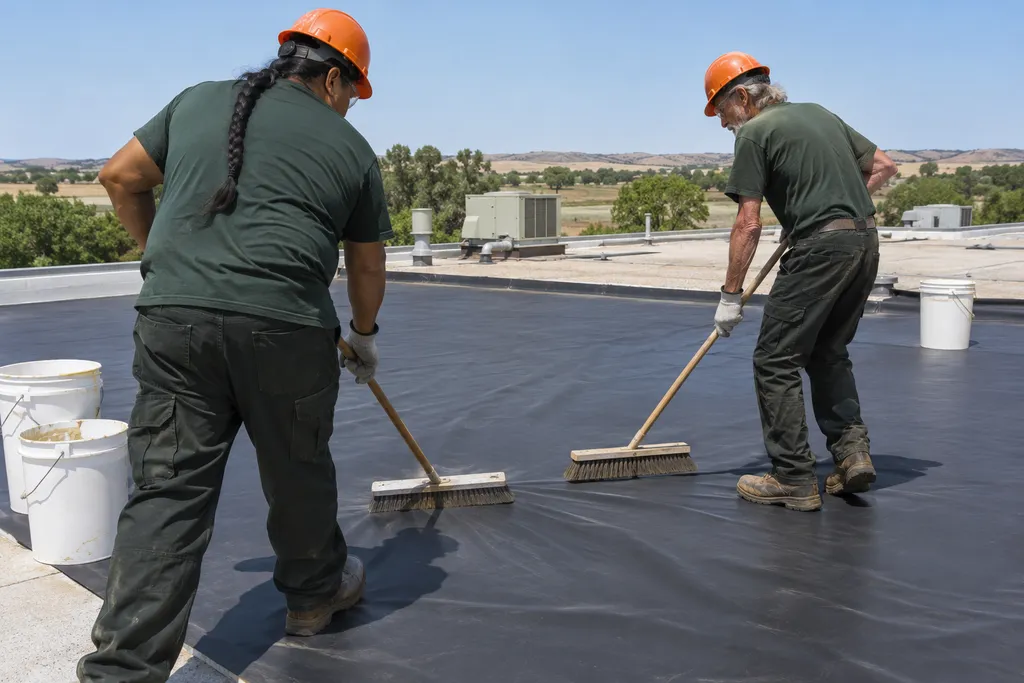
As a North Platte EPDM roofing contractor, we install fully adhered and ballasted EPDM rubber roofs on flat commercial buildings, with taped seams and new insulation.
North Platte EPDM roofing earns its place on cold, flat roofs, while TPO and metal take over on others. The columns compare all three.
Old EPDM tells you when it is done, and these are the signs we look for on the roof.
Older EPDM laps were glued with liquid adhesive that dries out, so seams open first along the field and at T-joints.
Rubber shrinks with age and tightens like a drum at parapets and curbs, pulling flashings loose and tenting the corners.
Bruises and pinholes from hail look small, but water travels under the sheet and shows up far from where the stone hit.
Black EPDM soaks up summer heat, and after years in the sun the top layer crazes and wears thin near units and walkways.
Three decisions shape an EPDM roof before the first roll goes down.
Fully adhered rubber is glued to the insulation and adds almost no weight. Ballasted EPDM lies loose under river stone, which works only where the structure carries that load.
Sixty mil is the common choice, and 90 mil adds material for roofs with heavy foot traffic, hail exposure, or long service plans.
Core samples show how far the wet insulation runs. Limited damage can take a new section of EPDM, while spreading water calls for a full tear-off.
Small repairs help a young EPDM roof. On an old, shrinking sheet, a new roof changes these things.
| What Changes | Patch The Old EPDM | New EPDM Roof |
|---|---|---|
| Seams | Old adhesive laps re-taped one by one | Factory seam tape on every lap |
| Edges | Shrinkage keeps pulling flashings | Fresh membrane and new edge flashing |
| Insulation | Wet board stays under the patch | New dry insulation across the roof |
| Hail Protection | Old sheet over soft board | Thicker sheet over a cover board |
| Winter Leaks | Meltwater finds old laps | Taped laps and new drain flashing |
Schedule a roof walk and core samples before pricing a new EPDM roof.
Schedule Free InspectionRubber roofs rely on clean, primed laps and mild weather for the adhesive, so the order of work matters.
Each section gets measured and cored so we know how many layers sit on the deck and how much of the insulation is wet.
Tear-off runs a section at a time, debris goes down a chute to a dumpster, and the deck is repaired before anything new goes on.
Polyiso boards and a high-density cover board are fastened down, with tapered pieces added where water used to pond.
Bonding adhesive is rolled on, the rubber is broomed flat, and every lap is primed and sealed with seam tape.
Curbs, pipes, and edges get EPDM flashing and termination bars, and we walk the finished roof with you before cleanup ends.
These three systems take over where rubber is the wrong call for the building.
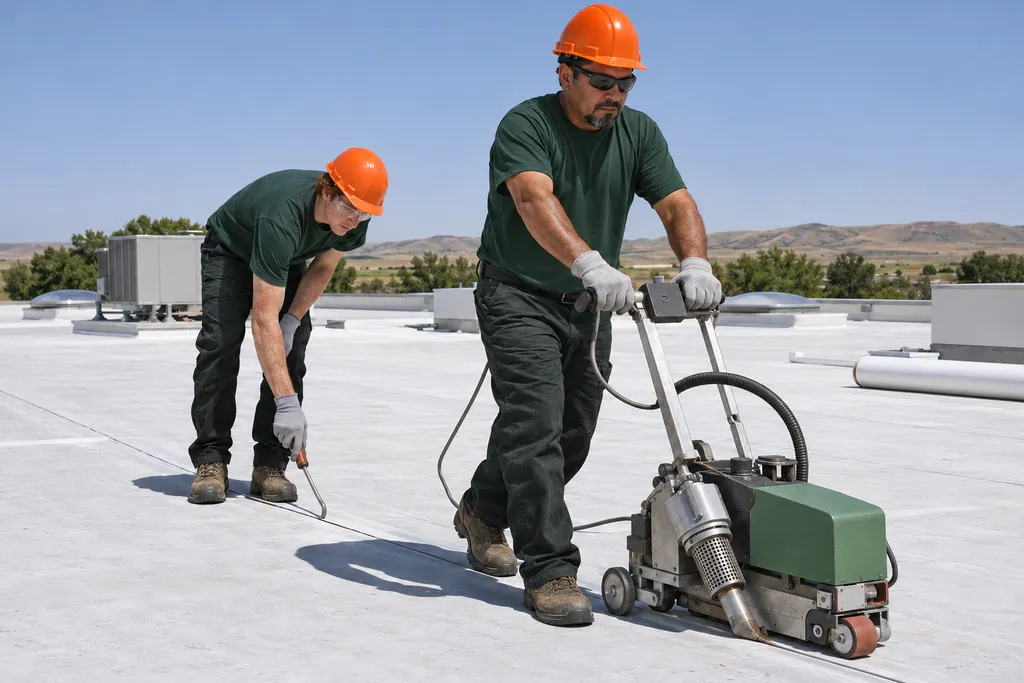
White TPO with welded seams fits big warehouses where summer heat on the roof matters more than winter flexibility.
North Platte TPO roofing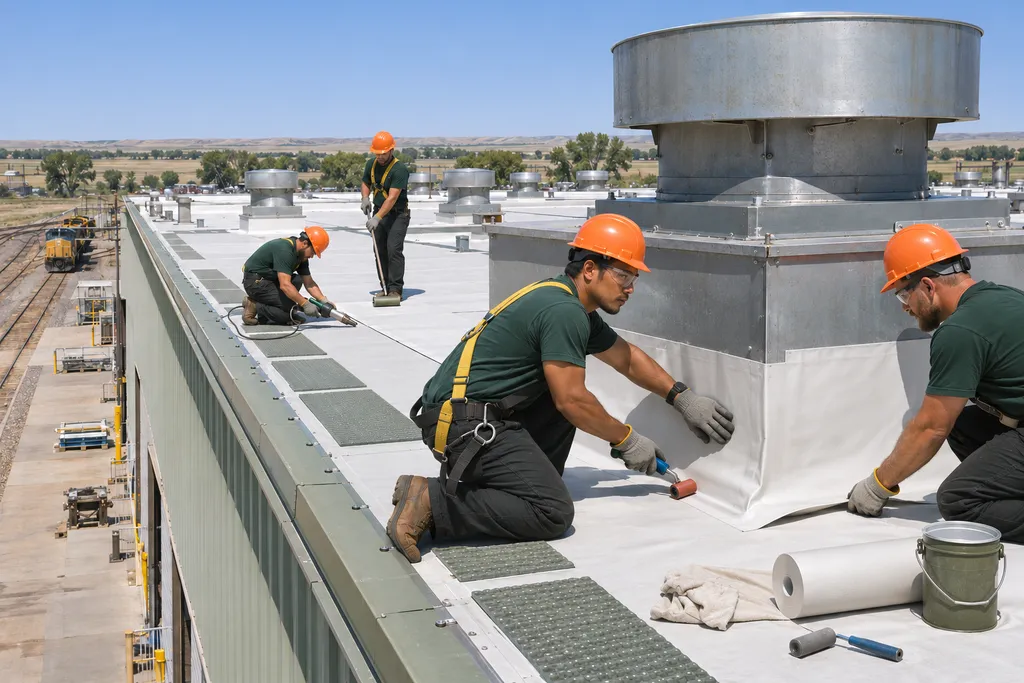
Factories with process exhaust or heavy fans often need a different membrane than EPDM, chosen for what vents out.
North Platte industrial roofing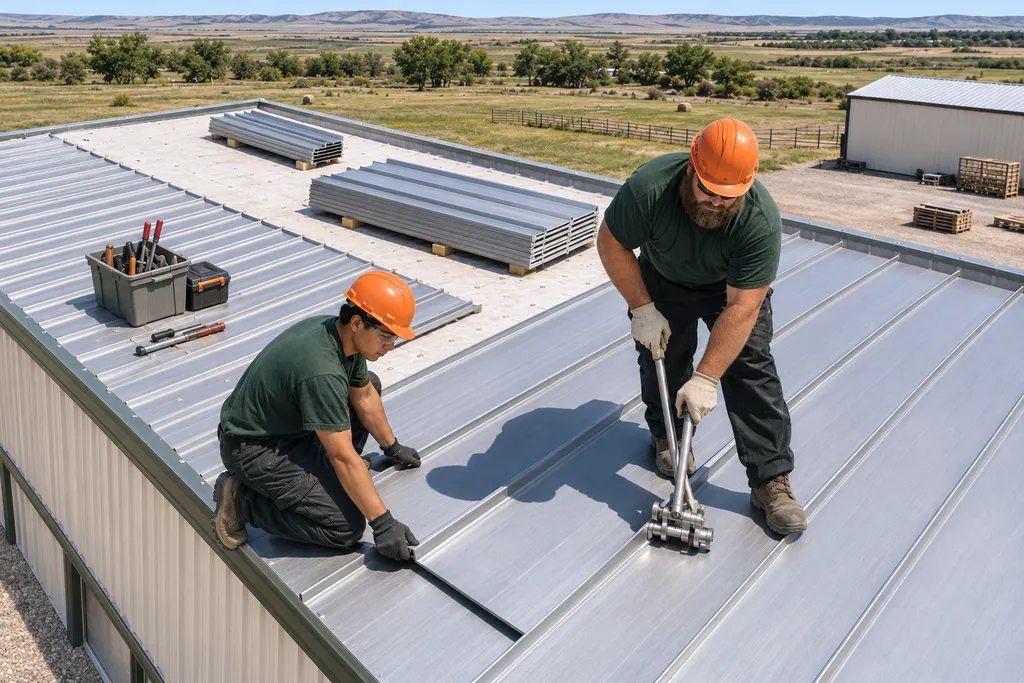
Shops with a pitched roof skip membranes and take metal panels with snow guards over the doors.
North Platte commercial metal roofingAnswers for owners weighing a rubber roof.
Glued-down EPDM resists wind uplift and adds almost no weight, which makes it the usual pick here. Ballasted rubber is held by loose stone or pavers, so the structure has to carry that load and the edges must keep stone from blowing off. We check both before choosing.
Replacement time comes when the sheet has shrunk away from flashings, seams are opening in many places, or wet insulation is spreading. Repeat leaks after repairs point the same way. Core samples tell us how far the water runs, and if it is contained, a new section of EPDM in that area can be enough.
Sheet thickness, attachment method, insulation, and tear-off drive the number. Adhered systems use more glue and labor than ballasted ones, while seam tape, flashings at curbs and drains, and edge metal add to any job. If the structure can't hold ballast, the method changes and so does the price.
Lifespan comes down to thickness, seam quality, sun exposure, and maintenance. Manufacturers rate EPDM for long service, and a 90 mil sheet carries more rubber to wear than 60 mil. Edges and seam tape are where age shows first, so checking them each spring and fall helps the sheet reach its rated life.
Seam separation, shrinkage at edges and flashings, and punctures lead the list. Older roofs used liquid adhesive at the laps, and it weakens with time. Black rubber also absorbs July heat, which ages the surface faster. Hail and foot traffic cause most punctures, so pads around units help.
Cold is where EPDM does its best work, because the rubber flexes through big temperature swings without cracking. Installation is the harder part, since adhesive and seam tape need a minimum temperature to grab. We plan adhered work for mild days or switch to cold-rated products when a winter job has to go ahead.
Hail resistance comes more from what sits under the membrane than from the brand.
A thick sheet over a high-density cover board takes a hit far better than a thin one over soft insulation, and some manufacturers test whole assemblies for hail. We talk through cover board and thickness on every new EPDM or TPO roof.
Tell us what the old rubber is doing, and we will set a time to walk the roof and pull core samples.