
Exhaust
Membrane Softened By Exhaust
Grease and chemical vapor from process fans soften some membranes around the stack, turning a ring of roof spongy and easy to puncture.
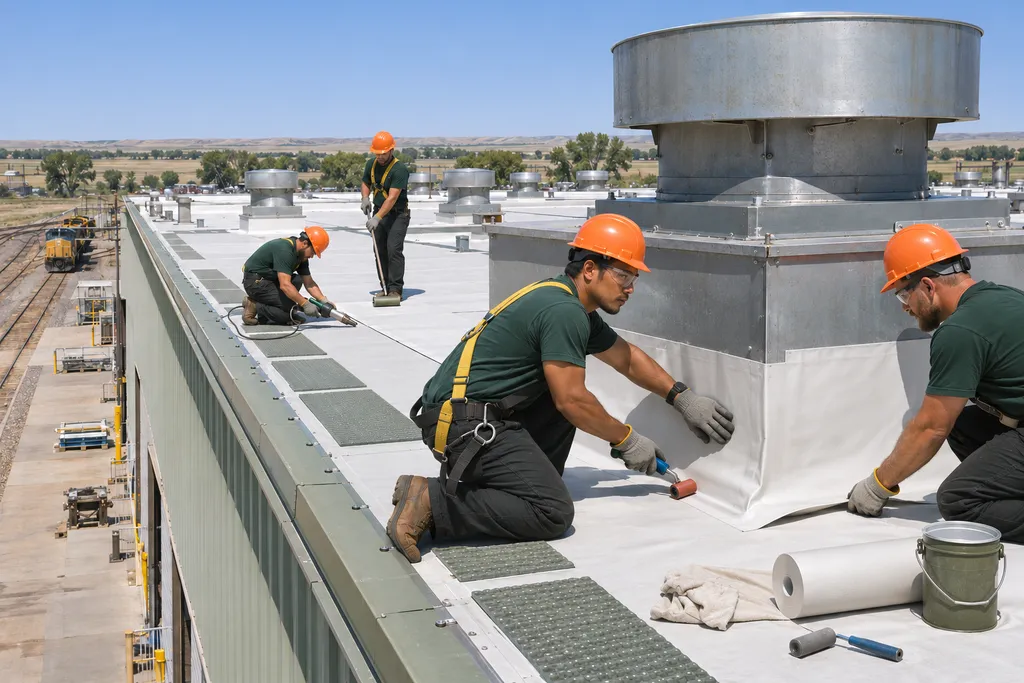
As a North Platte industrial roofing contractor, we replace roofs on plants and large facilities in phases, around production lines and the equipment below.
North Platte industrial roofing differs from a retail roof in load, exposure, and scheduling. The columns show where.
Plant roofs wear in their own ways because of what runs on top of them and below them.
Grease and chemical vapor from process fans soften some membranes around the stack, turning a ring of roof spongy and easy to puncture.
Maintenance crews cross the same lanes to fans and air handlers every week, scuffing the membrane thin wherever no walkway pads were laid.
Vibration from big fans and compressors flexes the flashing at their curbs until corners split and water runs down inside the curb.
Long-term leaks over steel deck rust the flutes, and sections that flex underfoot get replaced before any new roof goes down.
We match the roof to the plant, starting with what comes out of the stacks.
TPO and EPDM cover large, flat plant roofs quickly, and both come in formulas rated for added grease or chemical exposure.
Metal panels span purlins on pitched plant roofs and shed snow fast, with seam clamps that hold equipment supports without screws through the panel.
Multi-ply modified bitumen holds up on small, high-traffic roof areas such as around process equipment or along service walkways.
Patches keep production dry this week, and a phased replacement fixes the roof for the long run. Here is what changes.
| What Changes | Keep Patching | Phased Replacement |
|---|---|---|
| Production | Leak calls interrupt shifts at random | Work scheduled section by section with managers |
| Exhaust Zones | Softened membrane patched again | Membrane rated for the exposure |
| Equipment | Old curbs stay at their height | Curbs raised and flashed into the new roof |
| Walkways | Traffic keeps wearing bare lanes | Pads laid to every fan and unit |
| Insulation | Wet board traps moisture over the deck | Dry insulation and repaired deck |
Water dripping near equipment or product? Call and we will set a time to trace it.
Call UsStart with a roof walk, core cuts, and a phasing plan around your shifts.
Schedule Free InspectionPlant jobs add safety and scheduling steps that a small roof skips.
We map every fan, stack, and curb, note what each one vents, and pull core samples to find wet insulation across the roof.
Tear-off zones, crane lifts, and material staging get scheduled around shifts, with air intakes covered so roofing fumes stay outside.
Units that need taller curbs are lifted, the curbs rebuilt, and the equipment set back once the new roof is flashed around them.
Each zone is torn off, the deck repaired, insulation and membrane installed, and the section sealed watertight before the crew leaves.
Walkway pads go down along service routes, flashings are checked at every curb, and we walk the roof with your maintenance lead.
Smaller buildings around a plant often take one of these three systems.
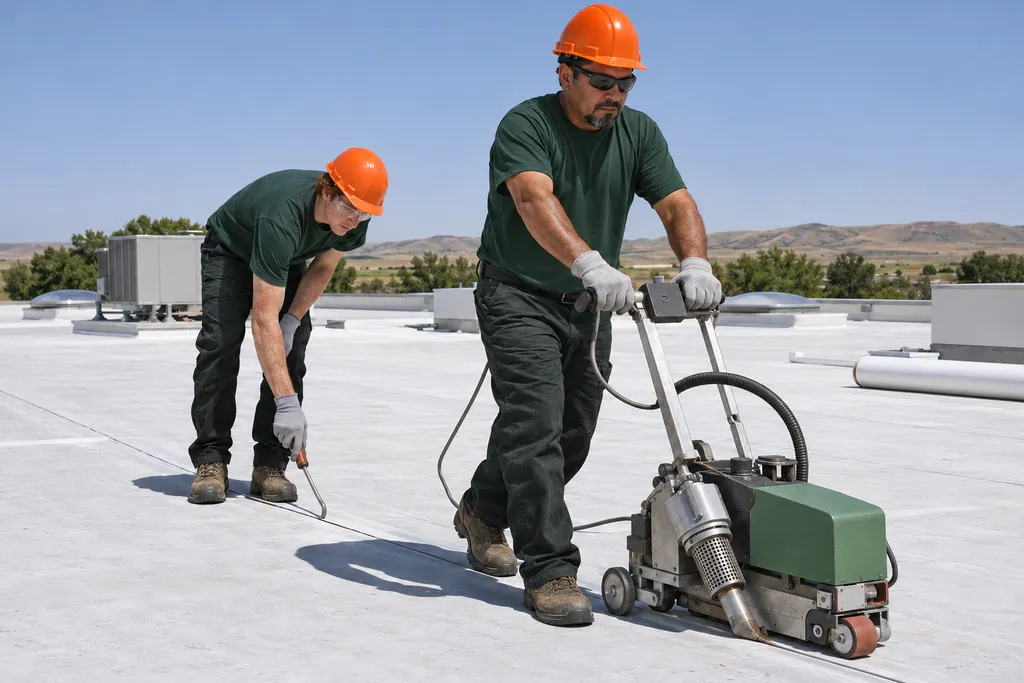
Large plant roofs without heavy exhaust often get white TPO, welded in wide rolls with few seams.
North Platte TPO roofing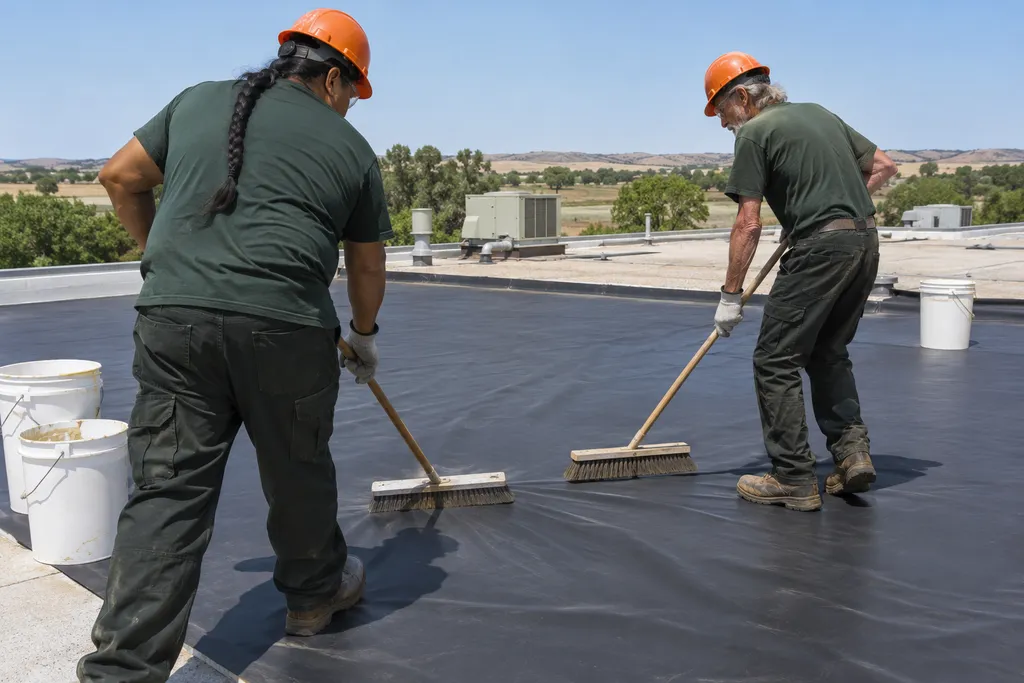
Cold-process buildings and freezer rooms suit rubber EPDM, which stays flexible on the coldest nights.
North Platte EPDM roofing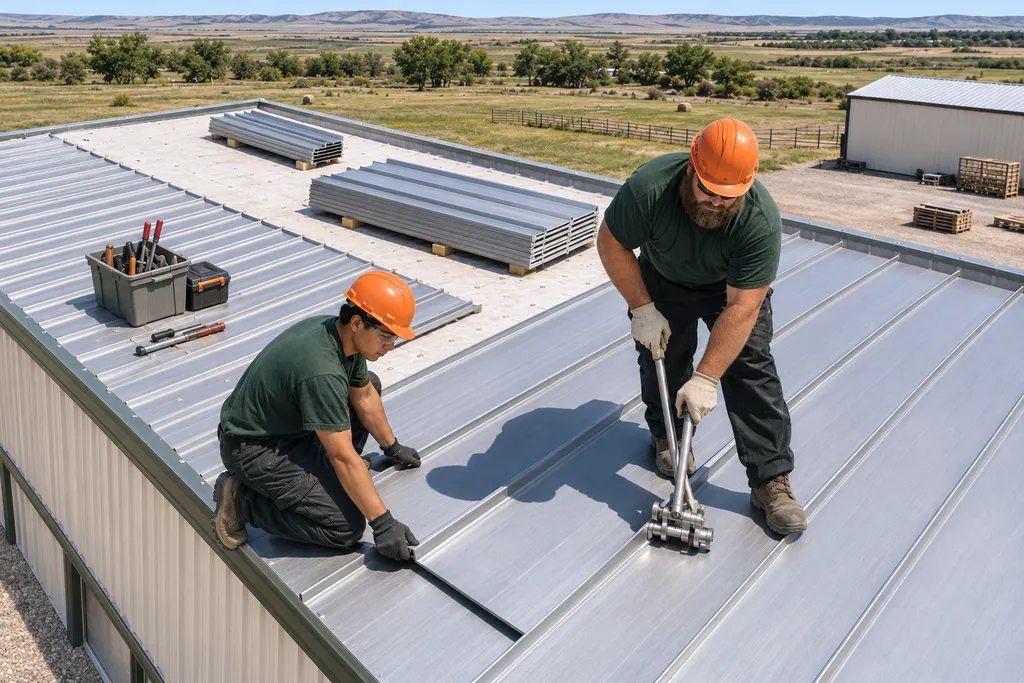
Pitched warehouses and equipment barns on plant grounds take standing-seam metal panels.
North Platte commercial metal roofingWhat plant and facility managers ask before a reroof.
Plant roofs here are usually TPO, EPDM, modified bitumen, or structural standing-seam metal. The right one comes down to exhaust, process heat, equipment weight, and how often crews walk the roof. Buildings that vent grease or chemicals need a membrane rated for it, so we inventory every vent before choosing a system.
It runs in sections: tear-off, deck repair, new insulation, and a new membrane or metal roof, timed around production lines and sensitive equipment below. Rooftop units are often lifted and reset on new curbs. Dust control and a watertight seal at the end of each workday keep the building protected.
Planning starts with shift times, safety zones, and the equipment under each section. Crane lifts, material staging, and fall protection get coordinated with plant managers, and each torn-off area is sealed before the crew leaves. Air intakes are covered so roofing fumes stay out of the building.
Heavier loads, more equipment, and more people on the roof. Factories, processing plants, and big warehouses see exhaust, vibration, and weekly maintenance traffic, so the work takes more safety planning and phasing than a retail roof does. System choice also has to account for heat and chemical exposure.
That answer comes from the structure under the roof, so a structural engineer confirms the load before heavy units go up. Then we build curbs, flash them into the roof system, and add walkway pads for service access. Planning new equipment and a new roof together avoids cutting into fresh membrane later.
Start with how each one plans to work around production. Ask for a phasing plan, a list of every fan and curb to be flashed, the membrane chosen for your exhaust, and who handles crane lifts and air intake protection.
Industrial roofing contractors who survey the roof first write scopes you can compare line by line.
Send the plant address and the trouble spots, and we will set up a roof survey and a phasing plan.