
Fasteners
Backed-Out Screws
Summer heat and winter cold move panels a little every day, and that motion walks exposed screws loose and splits their rubber washers.
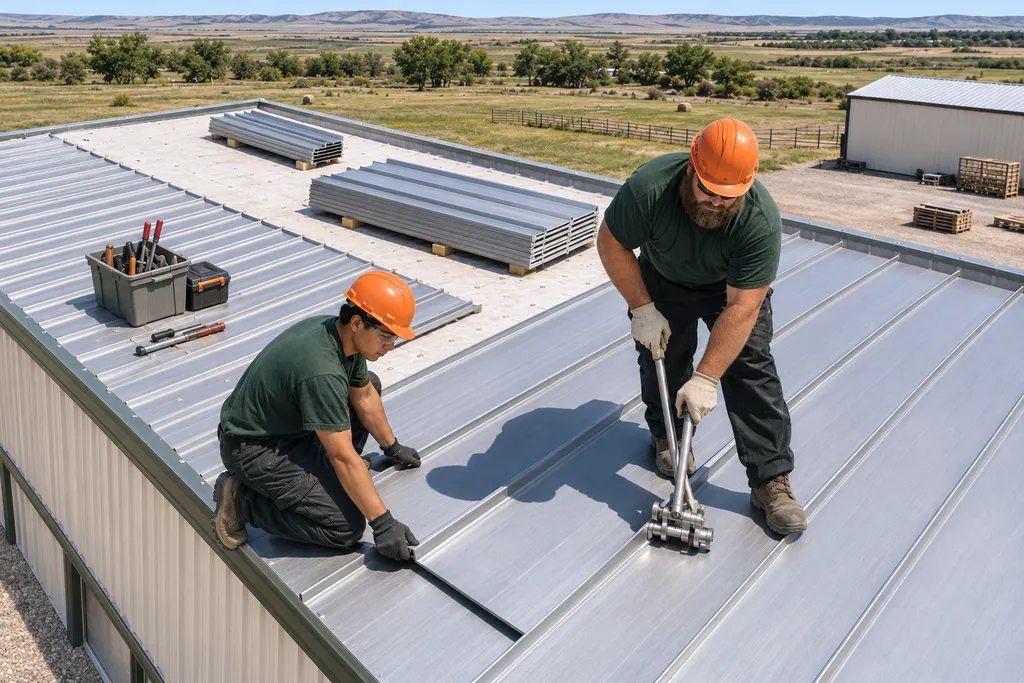
As a North Platte commercial metal roofing contractor, we install standing-seam and exposed-fastener metal roofs on shops, fleet garages, and agricultural buildings.
North Platte commercial metal roofing comes in two main panel types, and some low roofs belong under a membrane instead.
Old metal roofs show their age in a few predictable places.
Summer heat and winter cold move panels a little every day, and that motion walks exposed screws loose and splits their rubber washers.
Butyl tape and caulk at side laps and end laps harden and crack, letting wind-driven rain run along the panel ribs inside.
Cut panel edges, trim, and gutters rust first, especially at the eave where snowmelt sits against the steel.
Warm, moist air inside a shop condenses on cold panels, so drips appear on clear days and rust starts from underneath.
Three choices shape a new metal roof before the first panel goes up.
Machine sheds, feed storage, and ranch supply buildings take exposed-fastener or standing-seam panels, with vents and vapor control sized for what is stored inside.
A purlin or framing system can carry new panels over an old roof once we confirm the old layers are dry and the structure holds the added weight.
Guards clamp to standing seams or fasten to panels above doors and walkways, and new eave, rake, and ridge trim closes the roof edges.
Screw and sealant work helps a panel roof with solid steel. A new roof changes these parts.
| What Changes | Repair Old Panels | New Metal Roof |
|---|---|---|
| Fasteners | Oversized screws in worn holes | New panels with fresh fasteners or hidden clips |
| Laps And Trim | Re-caulked where they leak | New sealant, closures, and trim throughout |
| Rust | Wire-brushed and spot primed | New coated steel |
| Insulation | Old faced insulation stays | New insulation and vapor control |
| Snow Slides | Gutters and doors still take the hit | Guards laid out by slope and traffic |
Book a roof walk to check purlins, panels, and trim before pricing.
Schedule Free InspectionMetal roofs go up in a fixed order, from the frame check to the last piece of trim.
We measure the roof, check purlin spacing and rust, and note fastener patterns so new panels attach to solid framing.
Worn panels come off, or new framing goes over them when the old roof is dry and the structure can carry it.
Fresh insulation with a vapor retarder goes down so warm shop air stops condensing on the new steel.
Panels are set square to the eave, then seamed or screwed on a set pattern, with closures and sealant at every lap.
Ridge, eave, and rake trim go on, snow guards are placed over doors and walks, and we review the finished roof with you.
Metal buildings often sit beside flat roofs that need one of these systems.
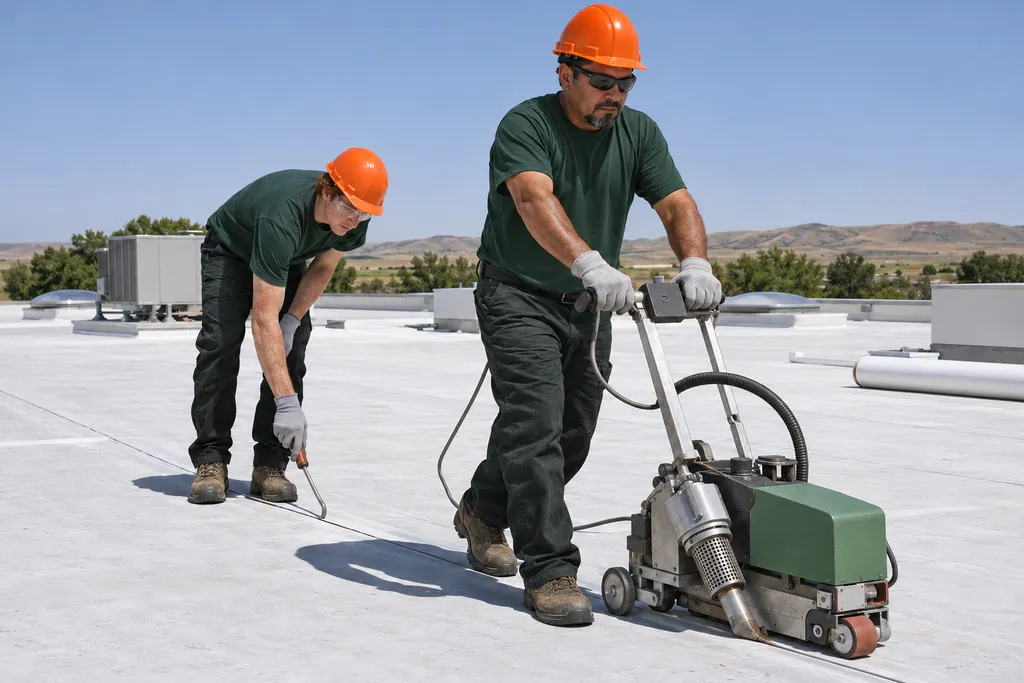
Flat sections and low additions next to a metal shop are better under welded TPO than under panels.
North Platte TPO roofing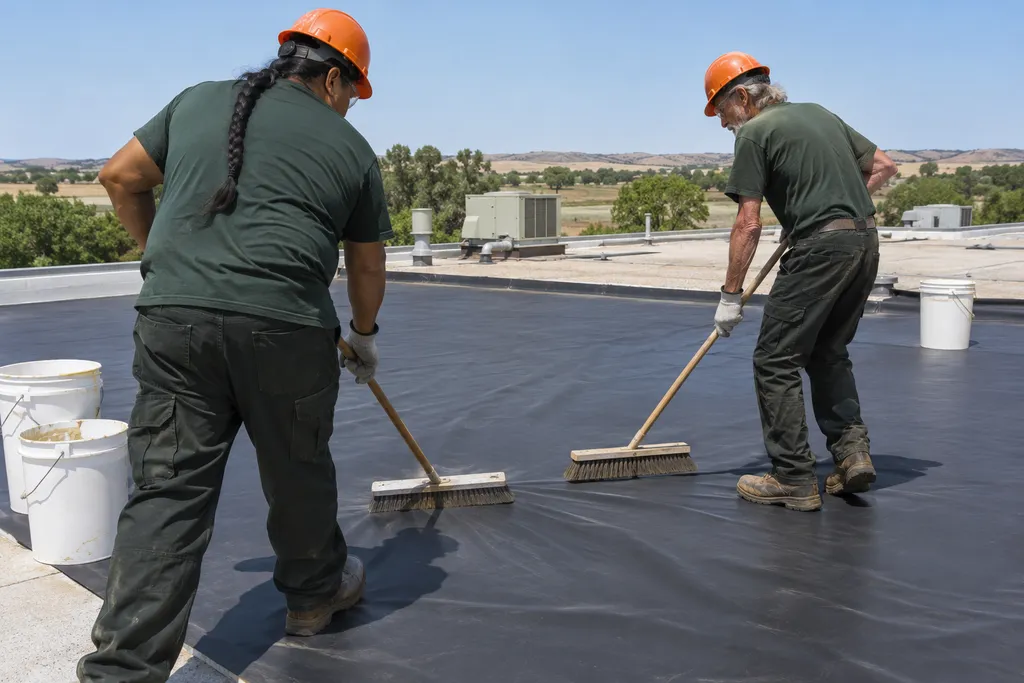
Low-slope rooms attached to steel buildings can take EPDM rubber that handles winter cold.
North Platte EPDM roofing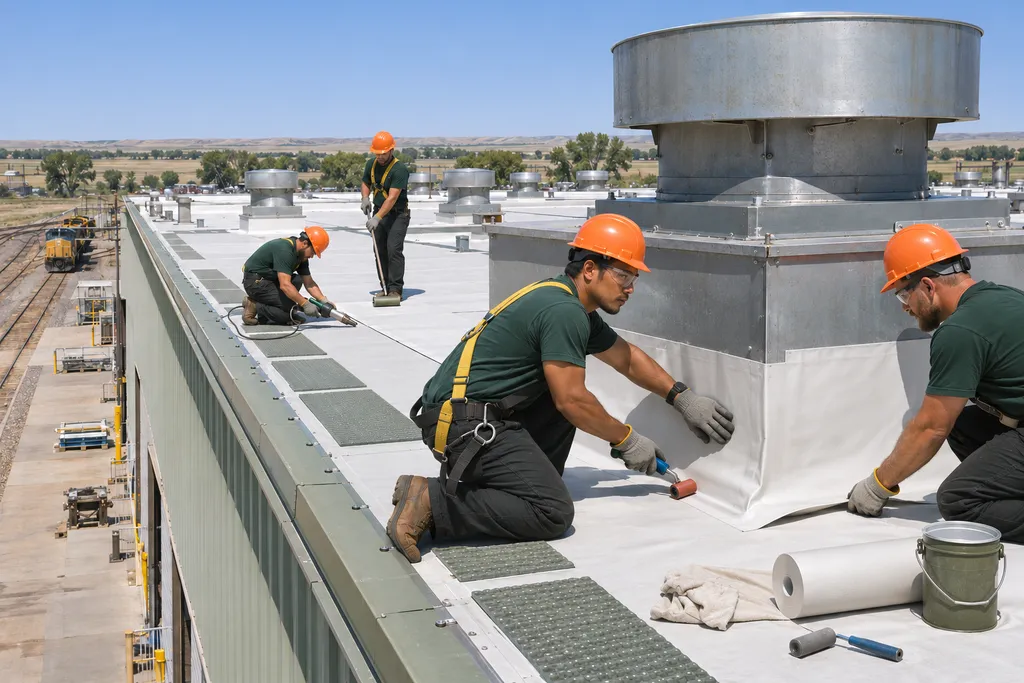
Metal plant roofs with exhaust fans and heavy equipment get an industrial plan with phased work.
North Platte industrial roofingWhat shop and ag building owners ask about metal roofs.
Yes. Machine sheds, feed storage, and ranch supply buildings are a natural fit for metal. Exposed-fastener panels cost less to put on, and standing seam hides its fasteners and moves with temperature. Livestock and storage buildings also need ventilation and vapor control, so we size panels, trim, and vents to the building's span and use.
Often, using a purlin or framing system laid over the old roof. First the old roof gets checked for wet insulation and for the structure's ability to take more weight, and the city's building officials confirm how many layers can stay. Moisture trapped under new panels leads to rust and odor later.
Price follows panel type, gauge, finish, and roof size. Standing seam costs more than exposed-fastener panels, and tear-off, new framing, insulation, trim, and snow guards add to the total. Tall buildings and complex shapes take more labor, so we price after measuring the roof and confirming the structure.
Loose or backed-out screws, failed sealant at laps, and rust at cut edges lead the list. Hot summers and cold winters move the panels enough to work fasteners loose, and condensation underneath rusts steel from the inside. Regular fastener checks, sealant repair, and good ventilation handle most of it.
Standing seam keeps fasteners out of the weather and lets long panels move, which suits a busy shop. Exposed-fastener panels cost less but leave thousands of screw holes to maintain. Low-slope shops usually need standing seam, because screwed panels want more pitch to drain.
Guards hold snow in place so it melts off slowly instead of sliding off in one sheet that crushes gutters, dents vehicles, or lands on people at a door.
The National Weather Service lists 34.3 inches for North Platte's snowiest winter, 2006-07. Guards clamp to standing seams or fasten to panels, placed by slope and foot traffic.
Tell us the building size and what the panels are doing, and we will book a roof walk and check the purlins.